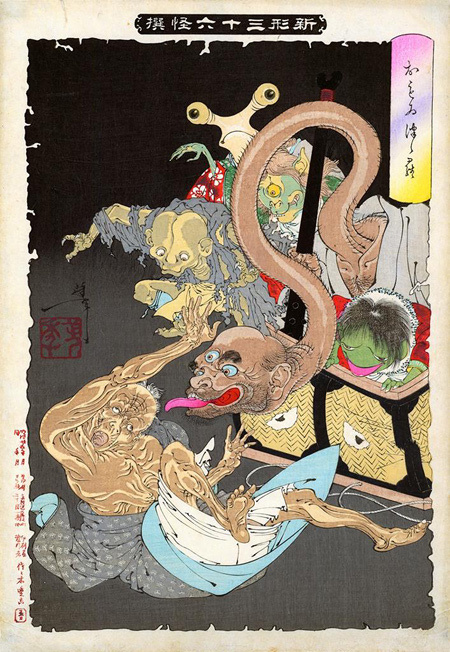
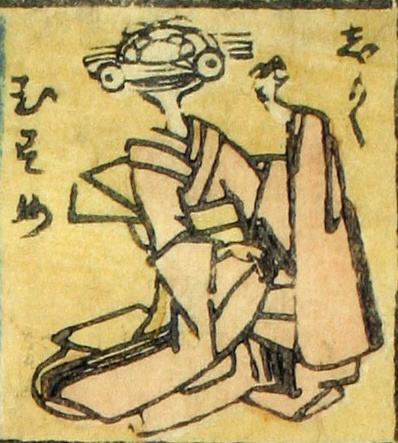
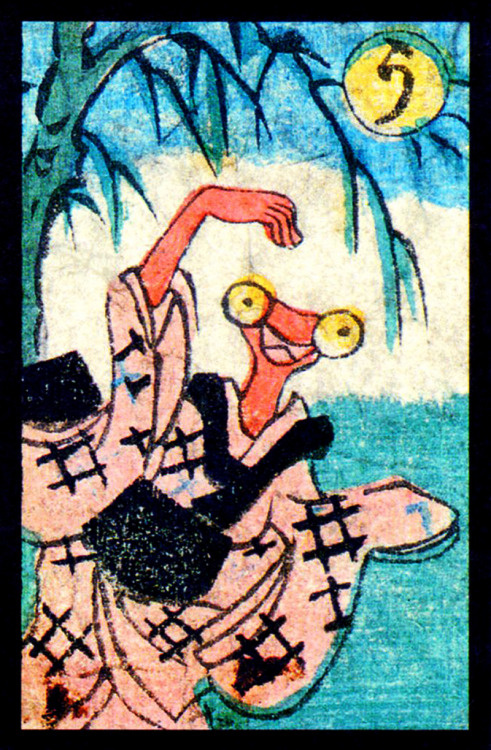
Omukade

Greetings yokai fans!

I have to admit that this yokai was a little hard to do, because centipedes freak me out. Especially the centipedes over here, which give me actual nightmares. If you can picture a huge, think centipede over 8 inches long with bright orange legs and and head, you’ll have some idea. Also, they are fast, and very aggressive, so they will actually chase after humans! They can’t be killed easily. Even if you cut them up, they will still run around for 30 minutes or more. You can burn them, boil them, but they just don’t die. And if you squash them, they release pheromones that attract more of them to come. They like to hide in shoes, bedsheets, toilets, bathtubs, and clothes drawers… so basically anywhere that you are most vulnerable. They also drop down from the ceiling onto people. They are venomous, and their bites are extremely painful. If a big one bites you on the chest or head, you have to go to the hospital.

So yeah… there is at least one thing I don’t like about Japan.

On the plus side, today we get to hear about our old from Fujiwara no Hidesato, who you may remember from the Dodomeki  and Taira no Masakado  entries!

 Ōmukade

大百足
おおむかで

TRANSLATION: giant centipede
HABITAT: mountains and caves; any dark and humid place big enough to hold it
DIET: carnivorous
CRITICAL WEAKNESS: human saliva

APPEARANCE: Ōmukade are monstrous mukade–centipedes (Scolopendra subspinipes) with dark bodies and bright orange legs and heads. They are often depicted with dragon-like features. While their non-monstrous cousins can grow up to 20 cm in length, the upper size limit on yōkai mukade is not known.

BEHAVIOR: Like their smaller relatives, ōmukade are vicious and highly aggressive. The bite of a regular mukade is venomous and very painful, but rarely fatal. Ōmukade, on the other hand, are much more venomous and very strong. They have even been known to torment dragons.

An ōmukade’s exoskeleton is so tough that it can’t be pierced by weapons. They do have one weakness though: human saliva is toxic to them. A weapon coated in saliva may be able to pierce through its armor and wound it.

INTERACTIONS: Ōmukade are extremely rare. When they are seen, they pose a threat to all in the area. Throughout history, the responsibility of exterminating these monsters has fallen on the shoulders of brave warriors.

LEGENDS: There is a famous bridge in Shiga Prefecture known as Seta no Karahashi. Long ago, a great serpent appeared on the bridge and would not move. The villagers were too afraid to approach the serpent, and so they could not cross.

One day, the brave warrior Fujiwara no Hidesato came to the bridge. He was not afraid of the serpent, and he crossed the bridge, crunching its great body under his feet. The serpent slithered back into the lake, and the bridge was clear again.

That night, a beautiful woman visited Hidesato. She introduced herself as the daughter of the dragon king of Like Biwa. The dragon king had sent her to Hidesato to ask for his help. Her family was being tormented by an ōmukade who lived on Mount Mikami. She knew that Hidesato must be a brave warrior, because he had so fearlessly trampled her body. Hidesato agreed to help the dragon king. He took up his sword and his bow and headed to the mountains.

Upon reaching Mount Mikami, Hidesato saw an enormous centipede coiled around its top. Its was so long that its body wrapped around the mountain seven and a half times. He fired his arrows at it until only one arrow remained, but he was unable to pierce the beast’s armor. Hidesato coated the tip of the arrow in his saliva, and said a prayer to Hachiman, the god of warriors. This time his arrow struck true, and he brought down the ōmukade.

The dragon king’s daughter was so grateful to Fujiwara no Hidesato that she gave him marvelous gifts: a bag of rice which never became empty no matter how much rice was taken from it; a roll of silk which never ran out no matter how much was cut from it; a cooking pot which always produced the most delicious food without the need for fire; and a large temple bell, which Hidesato donated to Mii-dera. The grateful dragon king also told Hidesato the secret to defeating Taira no Masakado, the rebel whom Hidesato had been charged with bringing down.

http://yokai.com/oomukade 

Yasha

Greetings, yokai fans!

Today I bring you the yasha. As I mentioned in the sketch post, it was hard to pin down a depiction of yasha, since the imagery has changed quite a bit — everything from and Indian-style god, to a Chinese warrior, to an oni, and a hannya. I went with the Chinese warrior style, partially because it fits with the style I have used for the other Indian imports, and also because the most common place you see yasha is in temple sculptures, which take on this style of depiction. The yasha that look like oni and kijo seem to be, for the most part, generic ghost or demon stories that were later attributed to yasha, or just a use of the word yasha to denote an evil spirit, but not necessarily the specific yasha we’re talking about here. 

It was hard to resist the urge to paint a ghost-like yasha, though. Particularly because of this movie: http://www.imdb.com/title/tt0079041/ Yasha ga Ike, known as “Demon Lake” in English (it should be “Yasha Lake,” of course). The small, remote village in that movie is actually right here in Fukui prefecture, so that movie has a special place in my heart. I’m a sucker for the local legends.

Yasha 

夜叉
やしゃ

TRANSLATION: yaksha; demon gods from Buddhist cosmology
HABITAT: rivers, forests, and mountains
DIET: omnivorous; occasionally man-eating

APPEARANCE: Yasha are a race of powerful, high ranking nature spirits which appear in Buddhist cosmology. They are a type of kijin, or demon god–both worshiped as benevolent gods and feared as wrathful demons. They are fearsome warriors, and serve as guardians of the treasures of the earth. They have varied forms, but generally are humanoid in appearance, with brightly colored skin, spiked hair, sharp teeth, and fierce eyes. They are usually depicted carrying weapons and wearing ornate armor.

BEHAVIOR: Yasha are one of the members of the the Eight Legions–eight supernatural races who listened to the sermons of Shaka Nyōrai and converted to Buddhism. Along with the ten, tatsu, kendatsuba, ashura, karura, kinnara, and magoraka, they serve as guardians of the Buddhist teachings.

Yasha serve Buddhism in a number of ways. Most importantly, the Twelve Heavenly Generals (the twelve most fearsome yasha), serve as the personal bodyguards of Yakushi Nyōrai, the buddha of medicine. They wage war on sickness and fight the enemies of Buddhism. They are also important in astrology–as there are twelve of them, they are associated with the twelve animals of the Chinese zodiac, the hours of the day, the months, and the directions. Their leader, General Kubira, is also an important kami in the Shinto faith. He is believed to be the manifestation of Konpira, a god of fishing, seafaring, and farming. He is enshrined as Ōmononushi in the Kotohira shrine of Kagawa Prefecture, alongside Sutoku Tennō.

Yasha, along with another kind of demon called rasetsu, are used as soldiers in the armies of Bishamonten, one of the Four Heavenly Kings. Bishamonten is often depicted trampling a tiny, evil yasha (called a jaki or amanojaku) under his feet. His armor is also often decorated with scowling yasha faces. In this way yasha also serve as a symbol the triumph of virtue over wickedness.

ORIGIN: Yasha come from Hindu mythology. They were originally benevolent nature spirits and caretakers of the trees and earth. In Buddhism, they were interpreted as evil, ghost-like spirits who preyed upon travelers, but later gave up their wicked ways upon hearing the sermons of the Buddha. The Buddhist version of yasha is very similar to another class of Hindu spirits: the ogrish, man-eating demons known as rasetsu. When Buddhism was brought into China, it mixed with Chinese folk religion and astrology, and yasha grew even further away from their Hindu origins.

When Buddhism was brought to Japan from China, the Chinese interpretation of yasha was brought along with it. In Japan, yasha were often viewed as Buddhist manifestations of local evil spirits, like amanojaku and oni. Yasha took on some of the characteristics of these spirits, and sometimes even became synonymous with them.

http://yokai.com/yasha

Karyobinga

Greetings yokai fans!

The cherry blossoms are beginning to fall from their branches this week, and the parks and rivers around here are so beautiful! This is a big festival week, of course, and neighborhoods around me are all having small block parties. Fukui’s “historical parade” takes place this weekend, when all the streets are closed off, and people wearing historical costumes parade from the castle, through the town, and up the mountain behind my house. It’s a fun festival, and I’m excited that this year I get to live right next to the parade route!

This painting took a little while because I was having trouble calling it finished. Finally, after taking a long walk under the cherry blossoms, I realized that it was missing a certain amount of motion. So I added the falling flowers and petals and all of a sudden the painting felt finished. So here it is: the karyobinga!

迦陵頻伽
かりょうびんが

TRANSLATION: a phonetic rendition of its sanskrit name, kalaviṅka
ALTERNATE NAMES: myōonchō (exquisite sounding bird)
HABITAT: Gokuraku jōdo, a realm of paradise
DIET: unknown

APPEARANCE: Karyōbinga are celestial beings from Buddhist cosmology. They have the head and arms of a bodhisattva, the body of a bird, and long, flowing tail feathers similar to that of a hōō. They live in a realm of paradise called Gokuraku jōdo.

BEHAVIOR: Karyōbinga possess voices of incomparable beauty. They begin singing while still inside of their eggs. After they hatch, they begin to dance and play heavenly musical instruments as well. They sing of the holy scriptures and the words of the buddhas.

ORIGIN: Karyōbinga come from Indian mythology. They originated in Buddhist scripture, which was brought to Japan from China. They differ very little from their Indian counterparts. They are usually used in paintings and sculpture as symbols of paradise and the Buddha’s words. They are a reminder that by living a holy life, one can be reborn into Gokuraku jōdo after their death. Practitioners of Pure Land Buddhism make reaching this paradise their goal. Gokuraku jōdo is a pure land of utter bliss–a celestial kingdom created by Amida Buddha. Its inhabitants can practice Buddhism directly under Amida’s tutelage, listen to the songs of karyōbinga, and achieve enlightenment themselves.

http://yokai.com/karyoubinga/

Kotobuki

Greetings yokai fans!

I previously introducted the sketch of this as “ju,” which is another reading of the kanji for its name. However, when looking up information about it, it seems that in Japanese, kotobuki is the more common version of its name. This makes sense, as kotobuki is a common word and contains the celebratory and congratulatory nuance that this creature conveys.

Also, happy birthday to Kim, who requested this yokai. I hope it brings you good luck on your birthday!

Oh, one more thing! March marks the end of the first quarter, which means those of you in the $30+ patron category are going to get your physical goods shipped to you in April! As I mentioned before moving, I’ve been exploring the possibility of offering alternative rewards instead of simply three prints. A popular suggestion was to get original paintings instead of prints. Many of you messaged me to say that you loved the handmade inkbrush kenmun postcards. I’m really glad to hear that! So I figured that getting another original painting would be appealing for some of you.

I made a number of yokai paintings a few years ago, before I moved to the US. I kept them in storage here in Japan, and now that I’m here again, I’m displaying them in my art studio. Some of you who are very long-time supporters of my art purchased some of these paintings back before Night Parade was published! So if you’re interested in getting an original yokai painting this month instead of a set of three yokai prints, please let me know! Or, if you have a preference of three prints, please let me know what you’d like.

Ok, on to today’s yokai!

Kotobuki
寿
ことぶき 

TRANSLATION: congratulations, long life
HABITAT: unknown
DIET: unknown

APPEARANCE: The kotobuki is an auspicious chimera whose body contains parts from all twelve animals of the zodiac. It has the head of a rat, the ears of a hare, the horns of an ox, the comb of a rooster, the beard of a sheep, the mane of a horse, the neck of a dragon, the body of a boar, the shoulders of a tiger, the front legs of a monkey, the rear legs of a dog, and the tail of a snake.

ORIGIN: The kotobuki was first documented in the Edo period. Woodblock prints of it were popular gifts, as merely possessing an image of the kotobuki was enough to protect a person from sickness and disease. Almost no explanation about the creature was included in these prints, other than that it was said to come from India, it could understand human speech, and was called kotobuki.

Good luck charms featuring the animals of the zodiac were popular during the Edo period. Even without a description, customers would recognize the twelve zodiac signs hidden in this beast. Further, the name kotobuki is a celebratory and congratulatory word, which makes this creature instantly identifiable as a powerful and auspicious creature.

http://yokai.com/kotobuki/

Gyochu, Kitai, & Mimimushi

Greetings yokai fans!

Here is the trio of infectious yokai that I missed from last month. There’s not really a theme to this set; I chose them because I really liked the way they all looked. The Harikikigaki has 63 infections total, and some of them have larval and adult stages, so there was a lot to choose from. I would have regretted it if I didn’t include these funny looking critters.

I’m also excited to put up another Koshin-related bug (the gyochu). There are a few Koshin-related yokai up on the website already (Shokera and Sanshi), and I wrote a little bit about the religion in both books. I’m glad that this next book will also have a Koshin-related yokai. It’s a cool religion that doesn’t really exist anymore. It died out in the 19th century as Japan modernized.

Anyway, here they are:

Mimimushi http://yokai.com/mimimushi/

耳虫
みみむし

TRANSLATION: ear worm

HABITAT: the ears and heart

APPEARANCE: Mimimushi is an infectious yōkai with long ears and a spotted, snake-like body. It writhes and slithers back and forth as it migrates between the ears and the heart, causing discomfort in its host.

INTERACTIONS: People infected with mimimushi crave cold foods and avoid hot food. Their stomachs appear swollen and bloated. Infections can be treated with remedies made from the herb byakujutsu (Atractylodes japonica) and the mushroom bukuryō (Poria cocos).

Gyochu http://yokai.com/gyouchuu/

蟯虫
ぎょうちゅう

TRANSLATION: intestinal worm; pinworm
HABITAT: the genitals

APPEARANCE: Gyōchū are infectious yokai with six arms and long red tongues. They are extremely fond of chatting and gossiping. They live and reproduce in the sex organs, making them a sexually transmitted yōkai. Gyōchū reproduce in the sex organs on Kōshin night, a holy night which occurs every sixty days in the esoteric Kōshin religion. Gyōchū leave their hosts on these nights and visit Enma Daiō, the king of hell and judge of the damned. They tattle on their hosts, telling all of their dreams, desires, and sins to Enma, who will inflict his divine wrath on them accordingly.

INTERACTIONS: There is no treatment for a gyōchū infection. The only way to keep safe from this infection is to avoid any chance of contracting an infection by abstaining from sex on Kōshin night. Traditionally, Kōshin night is reserved for praying. Believers gather together and refrain from sleeping for the whole night, so faithful practitioners should have no problem avoiding contracting gyōchū. People who have sex on these holy nights are committing a grave sacrilege, which the gyōchū will report to King Enma. During the feudal era, terrible diseases (leprosy, for example) were believed to be divine punishments for those who disrespect the gods.

Today, the name gyōchū refers to the pinworm.

 Kitai http://yokai.com/kitai/

鬼胎
きたい

TRANSLATION: uterus evil spirit; uterus ghost
HABITAT: the uterus

APPEARANCE: Kitai is a grotesque infectious yōkai which begins as a blood clot the size of a large sake cup. Its life cycle begins in the left abdomen, and as it grows it migrates to the uterus. Gradually, it develops a face that looks like a frightful cow, bright red with black horns. It grows a long body which coils around like a snake’s. Kitai has a very short temper, but moves extremely slowly, like a slug. Because of this it tends to feel a lot of stress, which it passes on to its host.

INTERACTIONS: Once a kitai takes on its adult form it is difficult to recover from. When a kitai slithers about inside of its host, it causes bouts of hysteria. It is difficult to treat with acupuncture, because the needles often cause the kitai to become stressed, which worsens the condition. There are secret ways of treating slow moving bugs like the kitai, but they are passed on orally from master to student.

Kenmun

Greetings yokai fans!

Today I bring you the kenmun, a yokai from southern Japan which is a kappa/kijimunaa hybrid, with its own strange little twist.

Also, check out the attachment to this post. I think I mentioned last month that the reason I wanted to do this guy was because I found a bottle of “yokai shochu” in the discount liquor bin. So I attached a photo of the liquor, which is called “Ryugu” (i.e. the name of the Dragon king’s palace on the ocean floor) and features a kenmun on the label.

I hope everyone has received their handmade postcards by now. I sent out February’s printed postcards today, and I’m not sure how long it takes to arrive from Japan, but I hope you’ll be getting them quickly! I mistakenly ordered extra large postcards this time, so for the next few months you’ll be getting giant-sized postcards! Lucky!

Anyway, on to the kenmun:

http://yokai.com/kenmun/

Kenmun
水蝹
けんむん

TRANSLATION: water spirit
ALTERNATE NAMES: kenmon, kawataro, yamawaro
HABITAT: the Amami islands
DIET: primarily fish and shellfish
CRITICAL WEAKNESS: octopus and giant clams

APPEARANCE: Kenmun are hairy water and tree spirits from the Amami islands in southern Japan. They look like a cross between a kappa and a monkey. They also closely resemble their Okinawan cousins, kijimunā. Their bodies are covered in dark red or black hair, and they have long, thin legs and arms. They are slightly larger in size than a human child. They have pointed mouths, and on top of their heads is a saucer-like depression which holds a small amount of oil or water. Their bodies smell like yams, and their drool smells terrible.

BEHAVIOR: Kenmun make their homes in banyan trees and spend their days playing in the mountains or near the water in their family groups. They particularly enjoy sumo wrestling, at which they are very skilled. As the seasons change, they migrate back and forth from the mountains to the sea.

Kenmun have a number of strange abilities. They are able to change their shapes. They often disguise themselves as people, horses, or cows. They can change into plants and blend in with the surrounding vegetation, or even disappear entirely. Kenmun can also create light. Their drool glows eerily, as do their fingertips. They have the ability to create fire from the tips of their fingers. Sometimes they use this fire to light the oil in their head-dishes. When mysterious lights are seen in the mountains or on the shores of the Amami islands, it is called kenmun machi by locals.

Kenmun like to hunt at night, lighting up their fingertips to search for food in the dark. They primarily feed on fish and small shellfish. They also enjoy slugs and snails, pulling off the shells and rolling them up like rice balls. (It is possible to identify a banyan tree inhabited by a kenmun by the sheer amount of snail shells piled up among its roots.) They absolutely hate octopus and giant clams, and will have nothing to do with them.

INTERACTIONS: Kenmun stay away from inhabited areas and run away when large groups of people are nearby. They will occasionally aid lone woodcutters and people gathering firewood by carrying heavy loads for them. They remember those who treat them kindly or do them favors. A fisherman who saves a kenmun from being attacked by an octopus is sure to earn its eternal gratitude. Some elderly islanders who have befriended kenmun are to call friendly kenmun out from the mountains to show to their grandchildren.

In general, kenmun do not harm people. They do, however, love competition, and cannot resit the chance to challenge a human to a sumo match. When their head-dish is filled, they have supernatural strength and cannot be beaten. However, kenmun like to mimic people, so if a challenger stands on their head or bows very low, their head-dish will empty out and they can be beaten.

While kenmun are not evil, they do enjoy playing pranks on humans from time to time. They may shape shift into animals and try to scare humans, or offer directions to people that get them totally and helplessly lost. They also have no shame about stealing food or even utensils from humans. Kenmun are very sensitive about being insulted, particularly about their body odors. Because of this, if a person talks about bad smells or farting while in the mountains, any kenmun who overhear it will become upset.

Kenmun do occasionally do wicked things to humans. There are stories of children who wandered into the woods and had their souls stolen by kenmun. Afterwards, the children behaved like kenmun, living in banyan trees and leaping from tree to tree when the villagers tried to catch them. Adults can have their souls stolen by kenmun as well. Kenmun like to force feed them snails, or pull them into rivers. These people are often later found unconscious beneath a banyan tree. If a banyan tree in which a kenmun lives is cut, the kenmun will place a curse upon the woodcutter. The kenmun’s curse causes its victims eyes to swell up, and then go blind. Eventually the cursed person will die.

Some families hang pig foot bones or Japanese pittosporum branches from the eaves of their roofs in order to keep kenmun from coming close. To drive away a kenmun, all it takes is to threaten it with an octopus. Merely threatening to throw an octopus at them is enough to send them running. If an octopus is not available to throw at them, they will also run away from a giant clam, or anything else you throw at them as long as you pretend it’s an octopus.

Hinnagami

Greetings yokai fans!

Today is Hina matsuri, and like I said the other day, this yokai has nothing to do with Hina matsuri whatsoever; however, it is a doll and this is doll’s festival, so that alone makes it related enough for me. I hope you enjoy this creepy one!

人形神
ひんながみ

TRANSLATION: doll god, doll spirit
ALTERNATE NAMES: kochobbo
HABITAT: homes

APPEARANCE: Hinnagami are powerful spirits from Toyama Prefecture. They reside in dolls and grant their owners’ wishes.

INTERACTIONS: A hinnagami will grant its owner any wish that he or she desires. Families who own hinnagami quickly become rich and powerful; and people who become rich and famous very quickly are sometimes suspected of owning hinnagami.

Hinnagami come with a catch: if a new request is not made as soon as a wish is granted, the hinnagami will demand, “What is next?” As soon as that request is fulfilled, the hinnagami demands another, and another, and another. This pattern never ends. Because their creation comes out of human greed and desire, hinnagami cling to their creators obsessively and never leave their sides. A hinnagami’s attachment is so powerful, in fact, that even death cannot separate it from its master. When a hinnagami’s creator dies, the hinnagami will follow them to hell and haunt them for all of eternity.

ORIGIN: Hinnagami are created through a long and complicated ritual. There are a few methods of creating a hinnagami, which vary bit by bit depending on who you hear the story from.

In the most common ritual, the person who wishes to create a hinnagami must begin collecting grave earth that has been trampled on by people during the day. Grave earth must be collected in this way every night for three years. For an even stronger hinnagami, they should take earth from seven different graveyeards in seven different villages. Once collected, the grave earth is mixed with human blood until it becomes clay-like. Then it is molded into a doll shape representing a god or a spirit that its creator worships. This doll is placed and left in a busy road until it has been trampled upon by one thousand people. Then the creator retrieves the doll, which has become a hinnagami.

An alternative method is to collect graveyard stones and carve them into one thousand small dolls, each about nine centimeters long. These dolls are boiled in a large pot until only one of them rises to the surface. The doll that rises is said to contain the combined souls of all one thousand dolls. It becomes a special type of hinnagami called a kochobbo.

http://yokai.com/hinnagami/