Appossha

Greetings yokai fans!

It’s been a while since the last post, but I am excited to share with you the appossha! Although this is a winter yokai, I thought it might help to keep you cool in this unquenchable summer heat!

I think that appossha is a really interesting yokai for a number of reasons. First of all, he is a super local yokai, found only in one tiny hamlet here in Fukui prefecture. He’s so local that people in Fukui who aren’t from that village hardly even know of him.
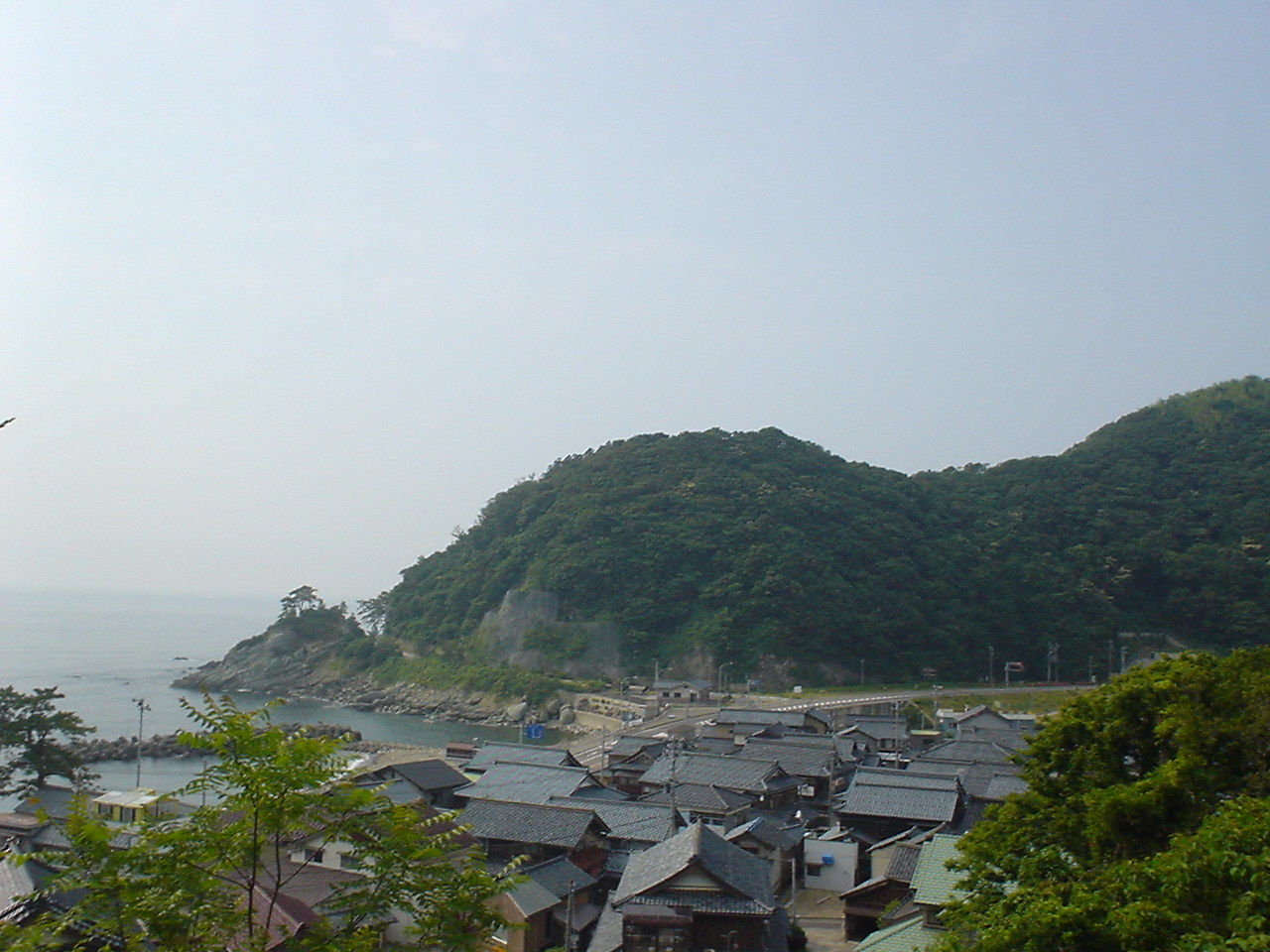
Koshino, Fukui, pop. ~1700 -> probably the same as the number of people who have heard of appossha.

So I love this yokai because he’s so local and so unknown, and also because he’s from Fukui, where I live. But more than that, I love what this yokai represents.

You’ll read about his origins down below, so I won’t repeat them here, but I just love the story of how this yokai came about. It’s one of those things where you can visualize almost exactly what happened in your mind’s eye: some foreign-speaking fisherman with only a smattering of Japanese, crawling out of the icy waters, red-faced, covered in sea weed, and banging from door to door begging in his broken language for some food. Of course children would be scared! And yet, when offered food and warmth, he turns out to be not monstrous at all.

What’s more, this yokai is a remnant of a lost aspect of folk religion, which has been blended and absorbed into modern traditions, but can be seen pretty clearly in this example.

The marebito religion is a concept that was put forward by folklorist Orikuchi Shinobu, a student of Yanagita Kunio. It describes a set of folk beliefs centered around what could be described as worship of “the stranger.” It describes an archetypal folk belief found in which a spirit from the world of the dead visits a village, and is offered food, shelter, etc. Yokai like the appossha and the namahage are perfect examples of this, but we also see some elements of this ancient folk religion in the festival of Obon, where the dead are welcomed back to the world of the living for one day. Although this isn’t a “religion” in the sense of having a doctrine or scriptures, it does describe a common set of practices seen throughout Japan, which still echo in contemporary Japanese culture.

Even pop culture can echo this, as we see in the scene where No Face enters the bath house in Spirited Away. No Face himself is a great example of a marebito; he is an unknown creature from an unknown land (unknowable, even, as he wears a mask — just as yokai like appossha wear masks). He brings gifts to the other guests at the bathhouse, but he also brings danger and threatens them. He’s welcomed in a ritualistic way with a song and a ceremonial parade. It’s clear that the storytellers did their research!

This sort of folk belief is of course not restricted to Japan. We see parallels in folk religions all over the world. Masks have been used as important religious devices all across the ancient world, and the concept of the stranger from another world is found all over folk lore, religion, and literature. They worship “the stranger” in the fantasy religion of Westeros. Heck, the movie E.T. is almost a perfect parallel to this type of story.

That may be stretching it a bit, but it’s clear there is something deeply, profoundly human that can be found even in a little-known, somewhat goofy yokai like appossha.

http://yokai.com/appossha/

あっぽっしゃ

TRANSLATION: from a phrase meaning “give me mochi”

HABITAT: underwater, in the Sea of Japan

DIET: omnivorous

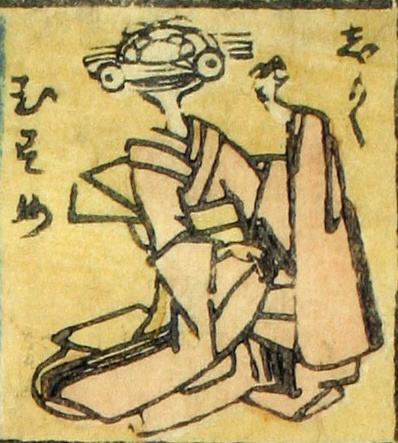
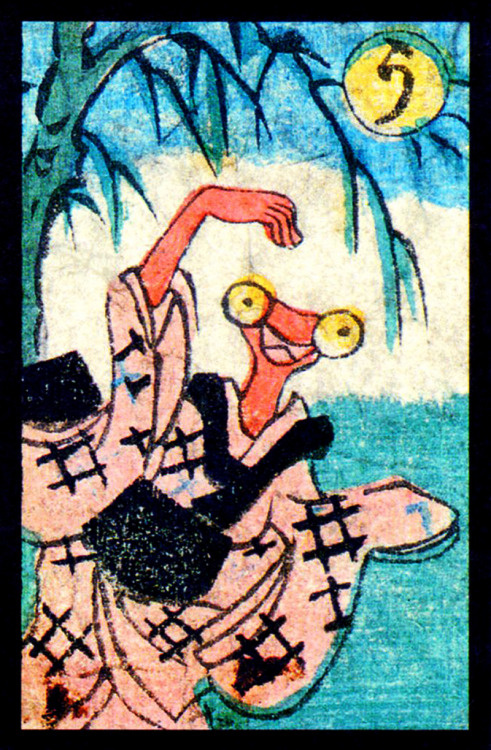
APPEARANCE: The appossha is a scary monster which appears in the village of Koshino in Fukui prefecture. It resembles a red oni, with a large head and dark, kelp-like hair. It wears the clothing typical of a workman.

INTERACTIONS: Appossha live in the Sea of Japan off of Fukui prefecture. They appear on land once a year, on Koshōgatsu—a holiday celebrating the first full moon of the lunar new year. On this night, the appossha crawl out of the sea and wander the village streets, banging iron tea kettles and chanting, “Appossha!” The travel from house to house, demanding food and threatening children. They ask each house if there are any ill-mannered children living there that they can take back to the sea with them. Once a household’s children have been thoroughly scared, the parents give a gift of mochi to the appossha and it leaves.

ORIGIN: The appossha tradition is said to come from long ago, when a sailor from a foreign land was shipwrecked and swam ashore in Fukui prefecture. He traveled from door to door begging for food. The name “appossha” is thought to be a heavily accented variation of the foreigner’s words, asking for some mochi to eat: “Appo (mochi) hoshiya (want).”

The appossha is part of a family of oni-like yōkai which are found all over Japan, but especially along the Sea of Japan coast. The namahage of Akita Prefecture are the most famous example. In nearby Ishikawa and Niigata Prefectures, similar yōkai named amamehagi can be found. In Yamagata they are known as amahage. Although the minor details (such as where the yōkai come from) differ, the key parts of each story are the same: these yōkai come from the wilderness around the new year, scare young children, and leave once offered a gift from the villagers.

Appossha are an example of a type of creature called a marebito. In Japanese folk religion, marebito are divine messengers—demons, gods, or otherwise—which come from the world of the dead to visit our world at set times. Some deliver prophecies or bring gifts, others bring disaster. The strange foreign spirit is welcomed as a guest, fed, sheltered, and treated kindly and respectfully. Sometimes they are revered as gods. Their coming is often welcomed in the form of festivals and rituals. Although the marebito folk religion is no longer practiced today, aspects of it are still a visible part of Japanese culture. Yōkai like the appossha and namahage, festivals like Obon, and the use of masks in noh theater have preserved many of the elements of this ancient superstition.

Kanazuchibo & Okka

Greetings yokai fans!

Today I bring you this month’s final yokai (or pair of yokai, rather).

Up top we have kanazuchibo and down below we have okka.

These yokai are similar to the previous ones in that their names were stapled on after the fact, and nothing has ever been written to describe their appearance. They’re also not folkloric yokai, as they only exist in the world of paintings. That said, they appear in a lot of paintings! These guys pop up in almost every yokai picture scroll, and so for a pair of yokai with absolutely nothing to their names (and not even a name, technically!), they are pretty well known.

I have had many requests to paint these guys, going back years. A lot of people want to know more about them, so I never wanted to be the bearer of bad news and say that there really just isn’t much to know about them. However, it’s possible to go to some length about them even though they don’t have any stories or names.

Read on to find out more:

Kanazuchibo http://yokai.com/kanazuchibou/
金槌坊
かなづちぼう

TRANSLATION: hammer priest

ALTERNATE NAMES: daichiuchi (earth striker), ōari (giant ant), yarikechō

APPEARANCE: Kanazuchibō is an odd-looking yōkai which appears in some of the earliest picture scrolls. It is depicted in a number of different ways by different artists, but in most depictions it has long, flowing hair, big, buggy eyes, and a beak-like mouth. Some paintings portray it more bird-like, while others portray it in as a grotesque, misshapen goblin-like creature. It’s most identifying feature is the large mallet it carries. It is usually portrayed holding the mallet over its head, ready to strike another yōkai.

ORIGIN: A mallet-weilding yōkai appears in many of the earliest picture scrolls of the night parade of one hundred demons. In its oldest depictions, kanazuchibō appears with no name or description. Names like kanazuchibō and daichiuchi were added much later, during the Edo period. However no description of its behavior were ever recorded. Many artists and yōkai scholars have made guesses at its true nature.

It has been suggested that kanazuchibō may be a spirit of cowardice.  His posture and his hammer evoke the proverbs “to strike a stone bridge before crossing” (meaning to be excessively careful before doing anything) and “like a hammer in the water” (meaning to always be looking at the ground and watching your step; picture a hammer in a river, with its heavy head sinking below the surface, but its wooden handle floating upright). Perhaps this is a yōkai which haunts cowards, or which turns people into cowards when it haunts them.

Kanazuchibō is also known as ōari, or giant ant. In prehistoric Japan there was a culture which built large earthen burial mounds known as kofun. It has been suggested that in the Kofun people’s religion, ants were revered as divine creatures since they build earthen mounds. As the Kofun religion died out, those creatures formerly worshiped as kami grew resentful and warped into these ant-like yōkai. While it’s an amusing story, there’s no evidence to suggest the Kofun people actually worshipped ants. This explanation was almost certainly made up by modern storytellers.

Toriyama Sekien included a version of this yōkai in his book Hyakki tsurezure bukuro. He re-imagined it as a tsukumogami born from a keyari—a hairy spear used as decoration and in parades. He named it yarikechō, or “spear hair chief.”

Okka http://yokai.com/okka/
大化
おっか

TRANSLATION: a baby-talk corruption of obake (“monster”)
ALTERNATE NAMES: akaheru, chikarakoko, gamanoke (“frog spirit”); countless others

APPEARANCE: Okka is a small, bulbous yōkai. It is usually depicted as a round, bright red creature with big eyes, two clawed feet, and a diminutive tail. There are many variations of this yokai, with minor difference in color, number of appendages, facial features, and hair.

ORIGIN: Okka appears in many of the oldest yōkai picture scrolls. Since its original name was never recorded, countless names have been used to describe this yōkai. The word okka is a baby talk variation of obake, a generic word for a ghost or monster. It fits this yōkai quite well, as okka itself has a somewhat generic and baby-like appearance. It also fits an established pattern of monsters being named in baby talk; waira, otoroshi, gagoze, and uwan are also thought to be “baby-fied” variations of scary words.

It has been suggested that okka may be a frog spirit, based on its appearance. It has also been suggested that okka is a tsukumogami, as it appears alongside other tsukumogami in paintings. Though it was never given a name or an explanation, okka has yet remained a common sight in scrolls depicting the night parade of one hundred demons. Okka is frequently depicted together with kanazuchibō; it appears to be the target of kanazuchibō’s hammer. However, their frequent pairing may be no more than a coincidence. Painters frequently copied directly from earlier yōkai scrolls, and without any description there is no way of knowing if the original painting that depicts okka being targeted by kanazuchibō was done so for a specific reason, or just because it looked amusing.

Furuougi & Hasamidachi

Greetings yokai fans!

It’s been a bit quiet since the last posting… This illustration and these yokai were quite an ordeal! I’m happy with the results of the final image, but boy did I wrestle with these two and the accursed background for a long time!

Worse than the painting, though, was researching. As I mentioned before, there is literally no information on them at all, anywhere. They were invented as images only, and have appeared on the earliest known yokai scrolls as well as many copies in the following centuries.

I took that more as a challenge than a fact, and I searched and searched and searched and searched. I was really hoping to find something interesting, some obscure tale, or anything in older folklore… but ultimately I was only able to confirm that there is no reliable description or folklore related to these two characters. There are some apocryphal stories in English-language books, but they appear to have just been made up by the authors.

I did manage to get their names, which were also invented more recently, of course, but I have a more reliable source for those. They were “named” by a present day yokai researcher who is a member of one of the largest yokai societies in Japan. He put out a book in the early 2000’s and added names to a bunch of these bizarre yokai from the early scrolls, and I figure his naming scheme is good enough for me. You probably won’t find them named Hasamidachi and Furuogi anywhere else, other than in reference to the same book by Aramata Hiroshi, but they are better names than just “fan monster” and “scissors monster.”

Anyway, here they are:

furuougi & hasamidachi

Hasamidachi

Furuōgi

Fugurima yohi

Greetings yokai fans!

Today’s yokai is another companion piece.

This is fuguruma yohi, the strange queen of the book cart.

You can probably guess who her companion is, as they are king and queen. Last month’s chirizuka kaio and today’s fuguruma yohi appear opposite each other in their original publication, Hyakki tsurezure bukuro. Like the strange king, this strange queen was made up by Toriyama Sekien, based on a pun from the Tsurezure gusa.

It’s never specified just what she is queen of (if anything). Presumably, she is just the queen of that book cart and it’s just a fancy name. But maybe she is queen of the tsukumogami entirely, ruling alongside the chirizuka kaio? It’s fun to speculate, but really there’s no answer, as neither of them are folkloric or mythological figures. They were both invented for Sekien’s book and really just mainly as silly puns that sharp-eyed and educated readers would enjoy on a level above just the funny illustration. Toriyama Sekien was a master at creating multi-leveled humor.

But regardless of what she is queen of, she’s a fun character to look at and a good addition to our collection of yokai!

Fuguruma yōhi

fugurimayohiThis post originally appeared on Patreon.com. Support my work and feed your yokai addiction by becoming a backer for only $1 per month!

Amabie

Greetings yokai fans!

Today is a cool, rainy day, which makes it perfect weather for a nocturnal, water yokai. Today’s yokai is the amabie.

I chose this yokai because I’ve already done jinja hime and kudan, and I really like doing yokai that reference each other. It seems that a lot of yokai were spontaneously “discovered” in the mid-1800’s, and all of them had the same advice: “Look at my picture and you won’t catch a disease.” Coincidentally, there were widespread pandemics of cholera and other diseases going around at this time, so it’s not hard to imagine yokai like amabie et al as a sort of psychological response to the fear of these deadly, contagious diseases. Worldwide deaths from the first three cholera epidemics alone  topped 15 million! That’s pretty incredible, and it must have wreaked havoc on the national psychology of the countries affected. I imagine that the hope these “good luck” yokai brought must have been a big relief to the poor peasants of the time.

Of course, those three yokai are not the only prognosticating practitioners. Tons of yokai (like baku) have been used as good luck charms against disease. Sometimes the yokai’s picture, or a small charm, or even just the act of writing the yokai’s name was all it took to protect people. While researching amabie and jinja hime, I came across so many copycat yokai… it would be tempting to do them all, but they are so similar it would end up being a long book full of the same story on every page.

In fact, copycat yokai were so popular at the time, that sometimes newspapers got caught publishing fake stories — in one case a paper in Kumamoto published a story about an “arie” (same thing as an amabie basically) that appeared in a local village. The thing was, that village didn’t even exist! So the newspaper had to print a retraction.

Anyway, on to the story!

http://yokai.com/amabie/

アマビエ
あまびえ

TRANSLATION: unknown; possibly a misspelling of “amabiko”
HABITAT: oceans
DIET: unknown

APPEARANCE: Amabie is a mermaid-like yōkai with a mixture of human and fish features. It has long hair and a scaly body. It has a beak-like mouth, and three legs. It glows with a bright light that can be seen from the shore. They are auspicious yōkai—keeping a picture of an amabie can protect you from disease.

ORIGIN: Little is known of the amabie’s characteristics. However, its story is very similar to other prophetic yōkai such as jinja hime and kudan, which deliver a prognostication and then disappear. These yōkai began appearing during a period when diseases like cholera were killing people all over the world. Images of protector yōkai that could be used as charms against sicknesses were in high demand. It is very possible that amabie was a sort of copycat yōkai, following the trends of the time.

The origin of the name amabie is a mystery. There is only one record of amabie in existence, and it appears very similar to another yokai with a similar name: amabiko. There are numerous recorded amabiko sightings, and all of them are minor variations on the same theme: a three-legged creature that appears on the water to deliver a prophecy about abundant harvests and disease. Similarly, amabiko instructs people to spread its image around to protect them from the disease. “Amabie” may have been a simple typographical error, or else it may be a regional variation of the amabiko.

LEGENDS: The only recorded sighting of an amabie comes from Higo Province (present-day Kumamoto prefecture) in April of 1846. For some nights in a row, a bright light could be seen in the waters off shore. One night, a government official went out to see to investigate the strange light. When he approached, a strange creature appeared to him. The creature introduced itself as an amabie. It told the government official that a six-year bumper crop was coming. It also said that should there be an outbreak of disease, he should immediately show the amabie’s picture to people everywhere, as it would protect them against harm. After that, the creature returned to the sea. Shortly after, the amabie’s story along with a woodblock print image of it was featured in the newspaper to be distributed to as many people as possible.

Chirizuka kaiō

Greetings yokai fans!

Tonight’s entry is a pretty obscure yokai, but he’s a funny one. Despite being another one of Toriyama Sekien’s inventions (he just slapped a name and an explanation onto a yokai that had already been painted in pictures scrolls for hundreds of years) he manages to give it some meaning and flesh it out into a really interesting creature.

Doing the writeup on this yokai forced me to read some of Tsurezuregusa, as well as the song from the Noh play, which was fun but not exactly a quick and easy translation. Sometimes the yokai which are obscure and have precious little written about them can turn into a rabbit hole when trying to unravel their mysteries. And then trimming that down into a concise explanation is another task!

Anyway, I hope you enjoy it:

塵塚怪王
ちりづかかいおう

TRANSLATION: strange king of the dust heap

HABITAT: dirty, cluttered places

DIET: unknown

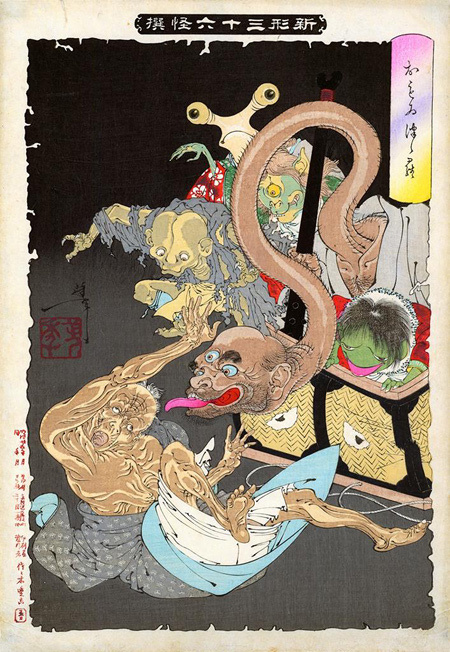
APPEARANCE: Chirizuka kaiō is a red, hairy demon who resembles a small oni. His clothing is old and tattered. He has wild hair and wears a crown on his head. He is the king of tsukumogami—the animated spirits of trash and discarded objects.

INTERACTIONS: Chirizuka kaiō appears in picture scrolls depicting the night parade of one hundred demons. In these scrolls he is prying open a Chinese-style chest and releasing a horde of tsukumogami—presumably the objects that were stored in the chest and forgotten.

ORIGIN: Chirizuka kaiō’s earliest appearance comes from the Muromachi period (1336 to 1573 CE). In the earliest scrolls he is depicted without name or explanation. His name first appears in the Edo period, where he is depicted in Toriyama Sekien’s tsukumogami encyclopedia Hyakki tsurezure bukuro. This book contains a number of yokai based on puns. Chirizuka kaiō’s name appears to be a pun based on essay 72 from Tsurezure gusa, a popular collection of essays from the 14th century. This essay discusses the folly of having too many things—too much furniture in your home, too many pens at your inkstone, too many Buddhas in a temple, too many rocks and trees in a garden, too many children in your home, and so on. However, there is no such thing as having too many books on your book stand, or too much dust upon your dust heap.

In his description of chirizuka kaiō, Toriyama explains that there is nothing in creation which does not have a leader; the kirin is king of the beasts, the hōō is king of the birds, and so this chirizuka kaiō must be the king of the yama uba. The phrase is actually another pun, and refers to a line from the noh play Yamanba. The line explains that worldly attachments pile up like dust, and if you let them build up into a dust heap then you may turn into a yama uba. Despite this phrasing, chirizuka kaiō has come to be interpreted as the king of tsukumogami rather than yama uba. This is most likely because he appears in Hyakki tsurezure bukuro, which is full of tsukumogami. There is no other connection between chirizuka kaiō and yama uba, as chirizuka kaiō has only ever been depicted releasing yōkai from a chest. Perhaps Toriyama used the word yama uba as an allusion to yōkai born from worldly attachment and ignorance. Yama uba are created when one’s improper attachments pile up like a dust heap. Tsukumogami are born out of forgotten household objects whose owners could not bring themselves to properly dispose of. The same kind of improper attachment is what forms both of these yōkai.

http://yokai.com/chirizukakaiou/

Sarugami

Greetings yokai fans!

This one took a bit longer than I had hoped to complete. I fought for a long time with the color scheme. But in the end, I am happy with how it turned out. The warm color scheme was an improvement on the cooler green hues I started out with.

Sarugami is a pretty fascinating yokai. It’s another one that is connected to Koshin, so it joins the ranks of such fun yokai as the sanshi, shokera, and a few others. Also, its legends are extremely similar to the monster-slaying legends you usually hear about oni, omukade, yamata no orochi and other daija. Basically a big ol’ monster for heroes to slay.

And there’s a fun little false etymology story in there as well! Quite a lot to digest with this one! I hope you enjoy it!

猿神
さるがみ

TRANSLATION: monkey god, monkey spirit
ALTERNATE NAMES: enjin
HABITAT: mountains
DIET: omnivorous

APPEARANCE: Sarugami look just like the wild monkeys that are found across the Japanese islands. However, they are bigger, more vicious, and much smarter. They can speak, and sometimes they are seen wearing human clothes as well. They are thought to be the remnants of an ancient monkey worshiping cult. All that is left of this religion today are wicked monkey spirits who have degenerated into yōkai.

BEHAVIOR: Sarugami behave for the most part like wild monkeys. They live in the mountains and tend to stay away from human-inhabited areas. Because they are bigger and smarter than most of the animals around them

INTERACTIONS: When sarugami interact with humans it almost always ends in violence. Most legends follow a similar pattern: a sarugami kidnaps a young woman from a villager, and heroes are called upon to go into the wilderness and exterminate the sarugami. Like oni, giant snakes, and other monsters, sarugami are beasts meant to be slain by brave samurai.

ORIGIN: According to folklorist Yanagita Kunio, sarugami are a prime example of “fallen” gods—spirits once revered as gods, but who have since been forgotten. These beliefs never entirely vanish, though, and such spirits often remain as degenerate versions of their former selves, i.e. yōkai. Long ago, before Buddhism arrived, monkeys were worshiped as gods in parts of Japan. The southern part of Lake Biwa in modern-day Shiga Prefecture was an important center of monkey worship, based at Hiyoshi Taisha. Monkeys were seen as messengers and servants of the sun, in part because they become most active at sunrise and sunset. Because of this, monkey worship was popular among farmers, who also awoke and retired with the sun. Over the centuries, as farming technology improved, people became less reliant on subsistence farming. More and more people took up professions other than farming. As a result, monkey worship began to fade away, and the monkey gods were forgotten. Today, monkeys are viewed as pests by farmers, as they dig up crops, steal food from gardens, and sometimes even attack pets and small children.

Though the early monkey cults have vanished, sarugami worship continued throughout the middle ages in esoteric religions such as Kōshin. Monkeys came to be viewed as servants of the mountain deities, or as mountain deities themselves, acting as intermediaries between the world we live in and the heavens. The famous three wise monkey statues—mizaru, kikazaru, and iwazaru (“see no evil, hear no evil, say no evil”)—come from Kōshin and are a prime example of sarugami worship.

An apocryphal legend says that long ago the Buddha appeared at Hiyoshi Taisha. Just before this occurred, a large gathering of monkeys arrived in the area. The Buddha took the form of a monkey, and foretold the fortunes of the faithful worshipers at Hiyoshi Taisha. Thousands of years earlier, Cang Jie—the legendary inventor of Chinese writing (c. 2650 BCE)—foresaw this appearance of the Buddha. Thus, when he invented the word for god (神), he constructed it out of characters meaning indicate (示) and monkey (申) to foretell this event. In other words, “monkey indicates god.” Although entertaining, this is a false etymology, and the true origin of the word for gods has nothing to do with monkeys.

LEGENDS: In Mimasaka Provice (present-day Okayama Prefecture) there was a giant monkey who lived in the mountains. Every year this sarugami would demand a sacrifice of a young woman from the villages around the mountain. One year, a hunter happened to be staying at the house of the young woman who was chosen to be that year’s sacrifice. Her family was devastated at the thought of losing their daughter, and the hunter took pity on them. He volunteered to take her place as a sacrifice. The hunter and his dog were loaded into a large chest and taken up into the mountains by some priests to be delivered to the sarugami. After some time, a giant sarugami more than two meters tall emerged from the woods, along with his entourage of over one hundred monkeys. The hunter and his dog leaped from the chest and attacked. One by one, the monkeys fell, until only the sarugami remained. Just then the creature possessed one of the priests and spoke through him. The sarugami asked for forgiveness and promised never to demand another sacrifice. The hunter allowed to sarugami to run away, and the sarugami has never asked for another sacrifice since.

In Ōmi Provice (present-day Shiga Prefecture) there lived an elderly farmer and his young daughter. The farmer toiled in his fields to exhaustion every day, while his daughter waited to be married off. But there were no suitors. One day, the farmer mumbled to himself, “Even a monkey would be ok, if only there was someone I could marry my daughter to so they would come work in my field!” Just then a giant monkey appeared and completed all of the old man’s farm work. The following day, the sarugami returned and demanded the old man’s daughter as payment for his work. When the old man refused, the saru grew angry at him for breaking his word, and he stole the man’s daughter and ran into the mountains. Back in his den, the sarugami kept the daughter tied up in a sack. Meanwhile, the old man begged a local noble to rescue his daughter. One day, while the sarugami was away from his den, the noble snuck in and freed the girl. In her place, he put his dog in the sack. When the sarugami returned to his den later he opened the sack to check on his prisoner. The dog leaped out and killed him.

http://yokai.com/sarugami