A-Yokai-A-Day: The Ghost Who Asked a Fox to Stop a Drinking Problem

Tonight’s story is another more narrative one like last night’s. And even better, it has two yokai for the price of one! You don’t often hear stories about yokai working together to get something done, but there are a few stories like that. In this one, we have a team of yūrei + kitsune.

I enjoy that Negishi seems to have taken the time to investigate this mystery while he was in Edo. His final paragraph puts the story into a contemporary context, and while it doesn’t add anything to the story itself, it does make it feel more in touch with the times.

The Ghost Who Asked a Fox to Stop a Drinking Problem

In Sakuma-chō, Kanda, there lived a man named Mankichi who loved sake and drank morning and night. One time, he called his daughter and said, “Prepare five (one is 180 ml) of sake for me to drink.”

Knowing his preferences, she took down the sake warmer and went to the sake shop next door and had them pour five gō of sake. Then she warmed it up and gave it to her father. Her father was pleased and tried to pour it into his bowl, but he found there was not a single drop inside.

He called his daughter and demanded, “What is this?”

His daughter was greatly surprised. “I carefully watched them pour the sake, so that cannot be possible,” she said.

She took the sake warmer, and this time had them pour one shō (1.8 liters) of sake. She brought it home and immediately warmed it up and served it. When her father poured it into his bowl, once again there was not a single drop inside, leaving him in a terrible mood.

The daughter was astonished and said, “The other day mother appeared to me in a dream and said that your heavy drinking was bad for your health and bad for the family. She told me to watch carefully and get you to stop drinking. I tried to get you to stop, but you wouldn’t listen, so I didn’t press any further. Could this be why the sake disappeared?”

The father replied, “I also had such a dream, but I dismissed it as nonsense. However, if that is the case, I shall stop drinking.”

And so, for a time afterward, he did stop. Then, the sake flasks and jugs that had recently vanished reappeared. However, at a neighborhood meeting he once again broke his vow and drank. Once again, all of his sake utensils vanished, and his daughter began to act as if she was possessed and blurted out:

“The spirit of my late mother, grieved by your excessive drinking, asked a fox to help reprimand you. Since you broke your promise, I have decided to return and be your chaperone.”

The father was terrified, and he vowed, “I swear firmly that from this day forward I will abstain from alcohol!”

After that, the daughter quickly recovered from her madness.

According to rumor, at Heisaburō’s store in Asakusa Mototorigoe-chō, there is a fifty-three year old man named Mankichi. His current wife, Sugi, is forty; his son, Ichitarō, is twenty-five; and his daughter, Gin, is eighteen. It is said that his late wife, Ei, who died sixteen years ago, was always worried about Mankichi’s heavy drinking, and was always admonishing him. Gin became mentally ill around the end of this January, and as she rambled about various things, it became clear that Ei had possessed her. As a ghost, Ei couldn’t do anything herself, so people say she asked a fox to use its magical powers to admonish Mankichi. Although it’s a strange story, it has become the talk of the town, so I am recording it. While the kindness of the late wife was only natural, people laugh at how the fox she enlisted was also a kind one.


A-Yokai-A-Day: The Strange Turtle in Asuwa River

Although Negishi was stationed on Sadō Island and in Edo for most of the time he wrote Mimibukuro, his stories were collected from people who traveled all around Japan. Some of them were probably traders on kitamaebune who brought stories from all over the place. Tonight’s story is one from my hometown of Fukui, and the Asuwa River mentioned is very close to my home and one of my favorite walking paths. This story is not in Echizen-Wakasa Kidan, despite being from here; however it will probably make it into a future volume.

This story is also interesting because it is much more narrative and story-like than many of the others we have seen. This was clearly a fantastic legend that was told to Negishi, rather than a report of a strange incident, and his writing shows it.

The poem in the story took me several hours to translate. If you remember last year’s A-Yokai-A-Day I probably complained a lot about translating Japanese poetry. It’s so hard to do, without utterly destroying the meaning and the beauty of the poem. That is once again the case here, as the painfully short line —

暮每にとひ來しものをあすは川あすの夜波のあだに寄覽

— evokes so much imagery and symbolism, while leaving so much unsaid. Japanese and English are extremely different in this way. English is more strict about context and grammar than Japanese in a lot of ways, and that is especially clear in poetry. In Japanese you can drop off any part of the sentence that you don’t want or need, and the reader has to infer that part. That makes it possible to create short and simple poems with evocative language and a specific meter that still carry double or triple meanings. These kind of poems are used as battles of wits or challenges very often in stories.

There are two parts of this story that leave me unsatisfied. The first is that we never get to hear the lord’s reply poem! Since it caused the turtle to stop attacking, we have to assume it was a brilliant poem that both demonstrated that the lord understood the double/hidden meanings of the original poem, and that solved the problem in one way or the other and satisfied the turtle. What could it have been???

The second is that Genzō gets a pardon for his crime, and it is written off as not a malicious act. This of course is because the man he killed was not a samurai, and thus was not important enough to warrant a punishment for his murder. Yuck. But that’s how life was under the samurai…

The Strange Turtle in Asuwa River

In Echizen, in Fukui Domain, there lived a brave and bold man named something-or-other Genzō. Yet, it was precisely because of his bold nature that he was ordered to serve as a retainer and sent to Fukui.

In Fukui flows the Asuwa River. It is traversed by a large bridge called Tsukumobashi. A giant turtle lives in that river and it is said to sometimes snatch people.

Now, one day, when Genzō was crossing Tsukumobashi, he saw a truly extraordinary giant turtle on the riverbank. Genzō thought, “That must be the abominable man-eating turtle!” And he drew his sword, stripped naked, and dove into the river.

He easily slew the turtle, and he asked the nearby villagers to help pull it out of the water. “The shell I shall present to the lord, while the meat I shall take home and eat with sake,” he decided.

He ordered his attendant to prepare the turtle while he took a nap. His attendant thought deeply, “A turtle this large must be poisonous. It would be unwise to let my master eat it. I shall dispose of it in the river, and explain my reasons.” He immediately discarded the turtle and then told his master. Genzō flew into a rage and mercilessly cut the attendant down.

The lord declared that Genzō’s handling of the matter was inexcusable. Genzō was placed under arrest and confined to a single room. Though he was such a brave man, Genzō was afraid of the lord’s punishment and his spirit weakened. Late at night when he was lying in bed, someone came to him and recited a poem:

Every evening my lover came to me at Asuwa River, yet tomorrow night only the empty waves will wash ashore. Now my revenge will come every night.

Then he struck Genzō on the head. The pain was unbearable, so he got up, but nobody was there anymore. This happened two nights in a row, so Genzō prepared himself, and around the time the poem was recited, he lifted his head from the pillow and held the pillow out. The pillow was shredded into bits. Though he was greatly startled, word of this reached the lord.

The lord said, “What a strange thing. Genzō killed a male turtle, so perhaps this is a female turtle seeking revenge.”

Then he composed a reply poem, sealed it, and floated it down the Asuwa River. After that the vengeful spirit ceased its attack on Genzō.

From that day on, Genzō reformed his ways and became more earnest.

Declaring that it was not a crime of malice, the lord forgave Genzō’s offense, and Genzō safely returned to duty.

A-Yokai-A-Day: The Strange Cat

Tonight’s story is another pet story (don’t worry — I promise the rest of the stories this month are not all animal ones, although I do have a couple more animal stories to share that I like). But this one won’t make anyone shed tears (I hope) like the previous horse, cat, and rat stories. In fact, I hope this one gets you to laugh, just as I laughed out loud the first time I read it.

I’m not a cat person, but this story still ranks very high on my list of favorite Mimibukuro stories. Enjoy!

The Strange Cat

There was a certain samurai family living near Banchō who never kept any cats. When somebody asked the master of the house why this was, he told them the following:

“There is a reason for it, but it would not do if it were widely known, and so I don’t talk about it. Yet, since you ask me so persistently, I shall tell you.

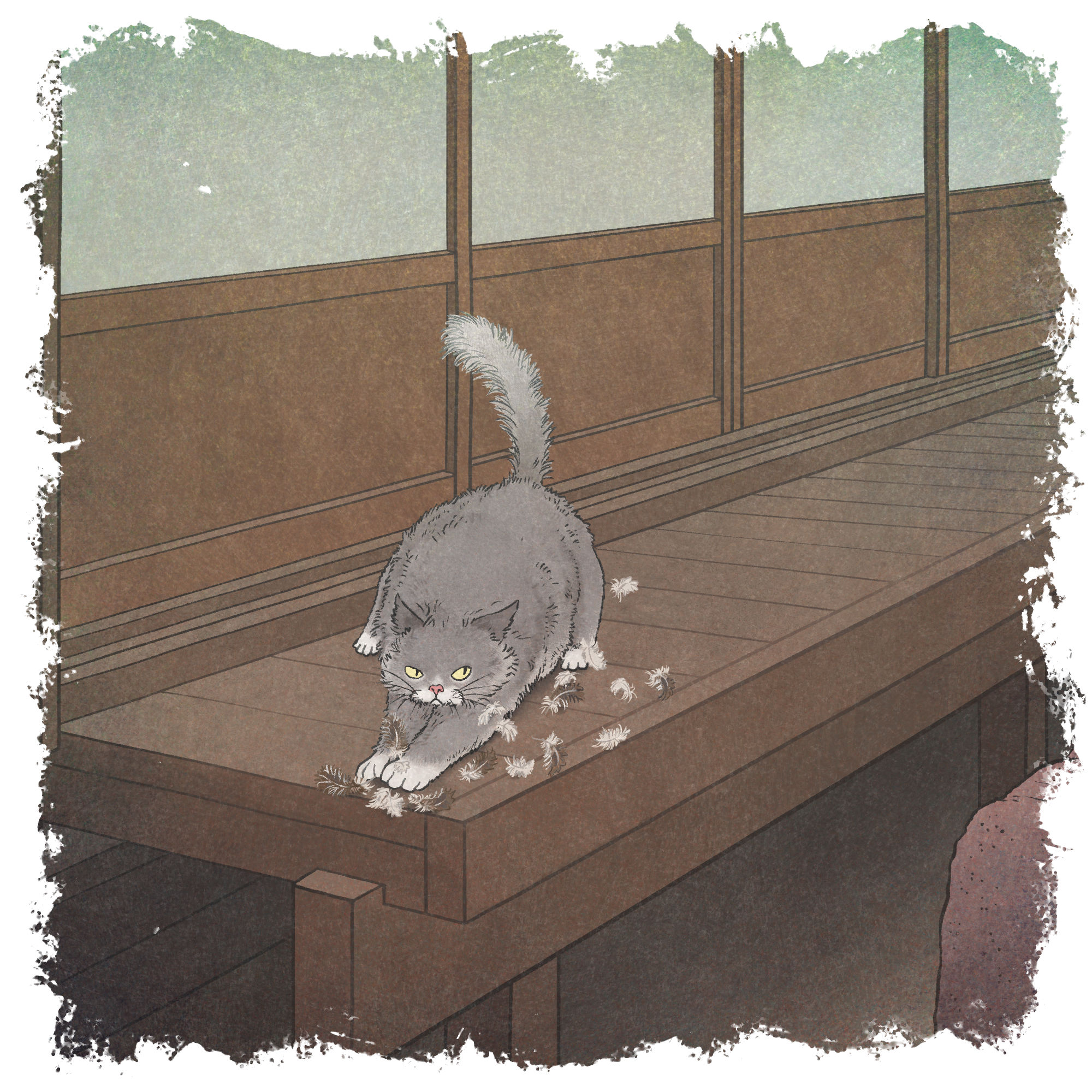
“Back in my grandfather’s time, we had a cat that we kept for many years. One day, this cat pounced at two or three sparrows perched on the edge of the veranda. The sparrows flew away immediately, but the cat uttered in a child’s voice, ‘Darn it!’

“Startled, my grandfather jumped on the cat and pinned it down. He grabbed a fire poker and raised it up, then snarled with murderous rage: ‘You are a mere beast, yet you speak! How unnatural!’

“The cat replied, ‘But I never spoke a word until now!’

“My grandfather was so startled that his grip loosened, and the cat leapt away and was never seen again. This incident is the reason.”

From that day onward, it was decreed in this household that nobody would ever own a cat, and to this day they strictly adhere to the ban and do not keep cats.

A-Yokai-A-Day: A Strange Encounter in Banchō

Tonight’s story is told in first person, by Negishi, and centers around a member of his family. Maybe there’s some truth to the idea that those who speak of ghost stories invite ghosts to them… Or maybe he just always had ghosts on his mind so he tended to see them where others might not.

Often people will ask me if I believe in ghosts and yokai, since I write about them so much. I imagine Negishi must have had a similar experience. Probably many people he spoke to asked him if he actually saw any ghosts, or if he believed in their existence. We’ve already seen his skeptical side, in yesterday’s story. Today’s might be a glimpse of his more credulous side… or maybe he is just making entertaining story. Regardless, he doesn’t commit to saying anything for certain in this story, and I enjoy the open-ended finale of tonight’s story.

Of course believe in supernatural creatures was widespread during the Edo period, even though some of the more fantastic yokai like rokurokubi and nurarihyon were understood to be imaginary. One type of spirit that lingered strongly in people’s beliefs was the yakubyōgami — probably because its effects were far more visible than something like a kappa or a noperabō. People frequently died from disease, and in great numbers too, so it was obvious something was killing them — they just didn’t know what germs were yet. Beliefs in such spirits persisted well into the 19th century, as evidenced by all of the prophetic yokai legends and prints that appeared in that time.

So maybe Negishi can be forgiven for expressing a hint of supernatural belief in this story.

A Strange Encounter in Banchō

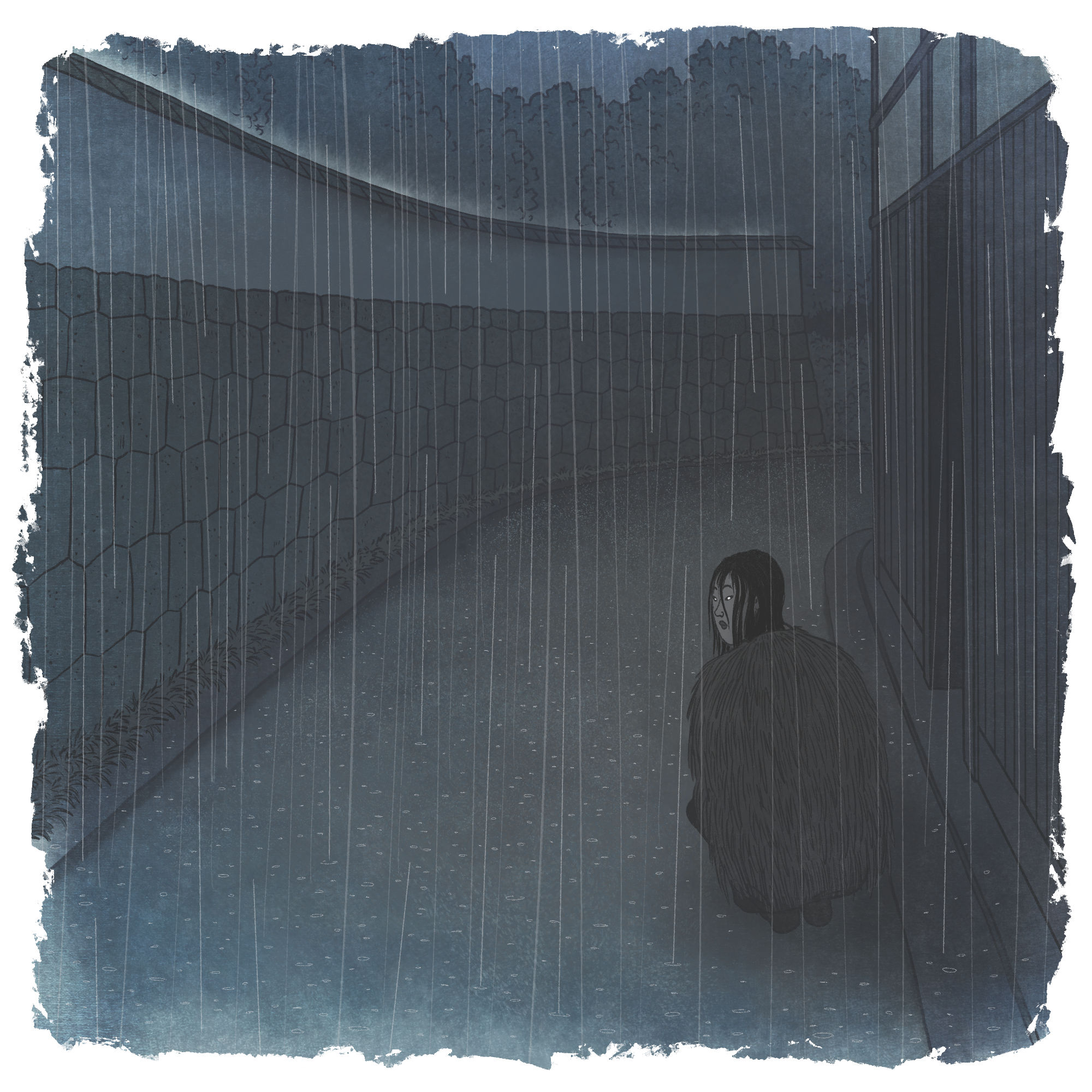
This happened when a member of my family, Ushioku, was in his prime. An urgent summons came from his watch duty companion. It was a stormy autumn night, and he was passing through the neighborhood of Banchō-Baba with one subordinate in tow. The rain was so heavy that there was nobody else on the road, and they had to shield their single paper lantern under a raincoat in order to keep it from being blown out. Just then, a figure resembling a woman was crouched by the roadside.

She wore something resembling a raincoat, but she carried no umbrella or hat. They couldn’t see clearly if it was a woman, and as they puzzled over it, they passed by the figure.

The attending samurai asked, “What could that be? Should we take a closer look?”

Ushioku replied, “It’s none of our business.”

Just then, two people looking like foot soldiers carrying lanterns came from a side street and went down the road Ushioku and his attendant had just traveled. They followed after the foot soldiers, but when they reached the place where the woman had been, nobody was there.

“This road is isolated on all sides; there is no way she could have gone anywhere…” they said to themselves as they returned to their original path.

They reached their destination, and as Ushioku approached the front gate, an intense chill came over him. The following day he came down with a terrible fever, and he was bedridden for twenty days. The samurai who accompanied him also suffered from chill and fever for about twenty days.

Was that woman perhaps a fever spirit revealing its form in the rain?

A-Yokai-A-Day: There is Truth Behind Ghost Stories

Well, I’m back from Kyoto, and while I am tired, I’m excited to share a new story with you all! Mononoke Ichi was a lot of fun as always, and it sounds like plans for even bigger future yokai events are being made at Uzumasa’s Toei Film Studio. I can’t wait for next year’s festival!

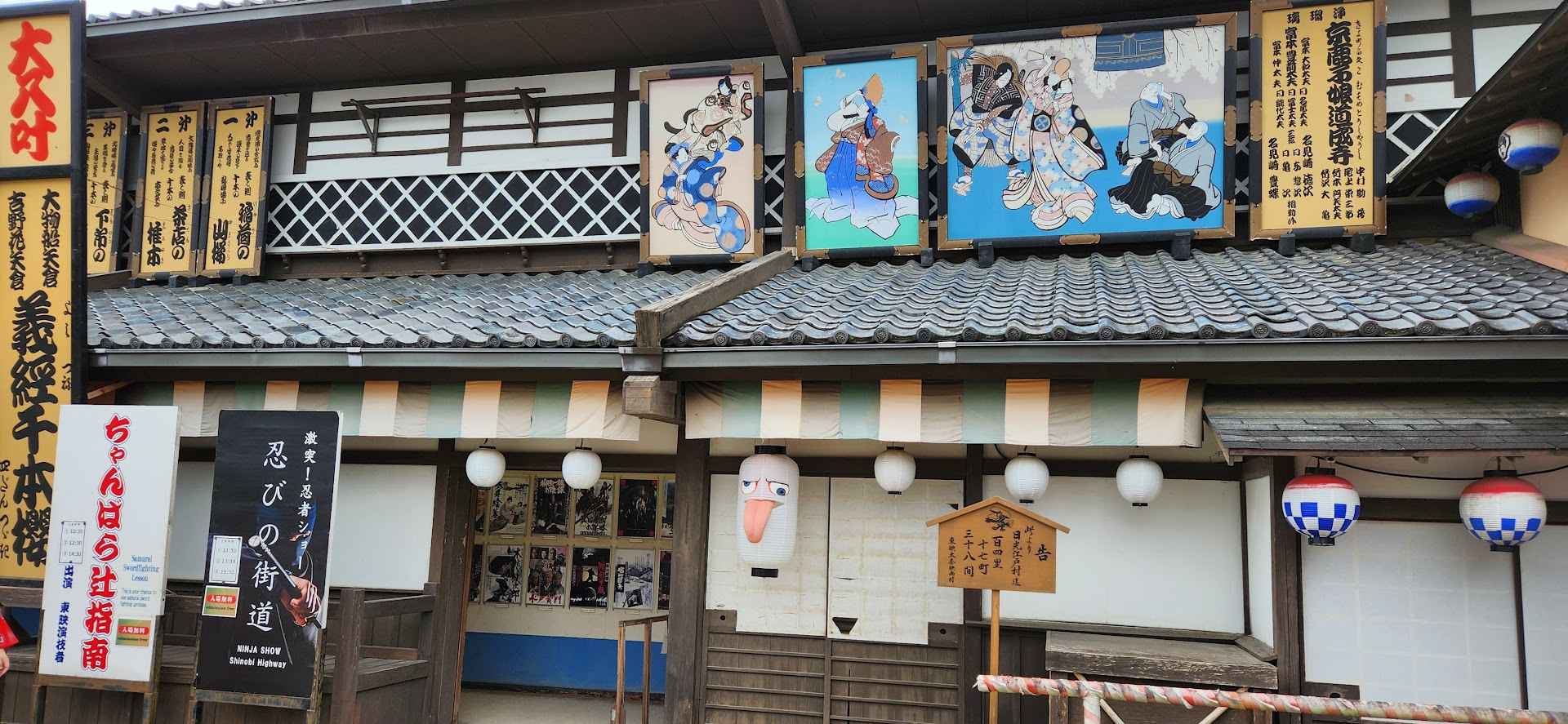
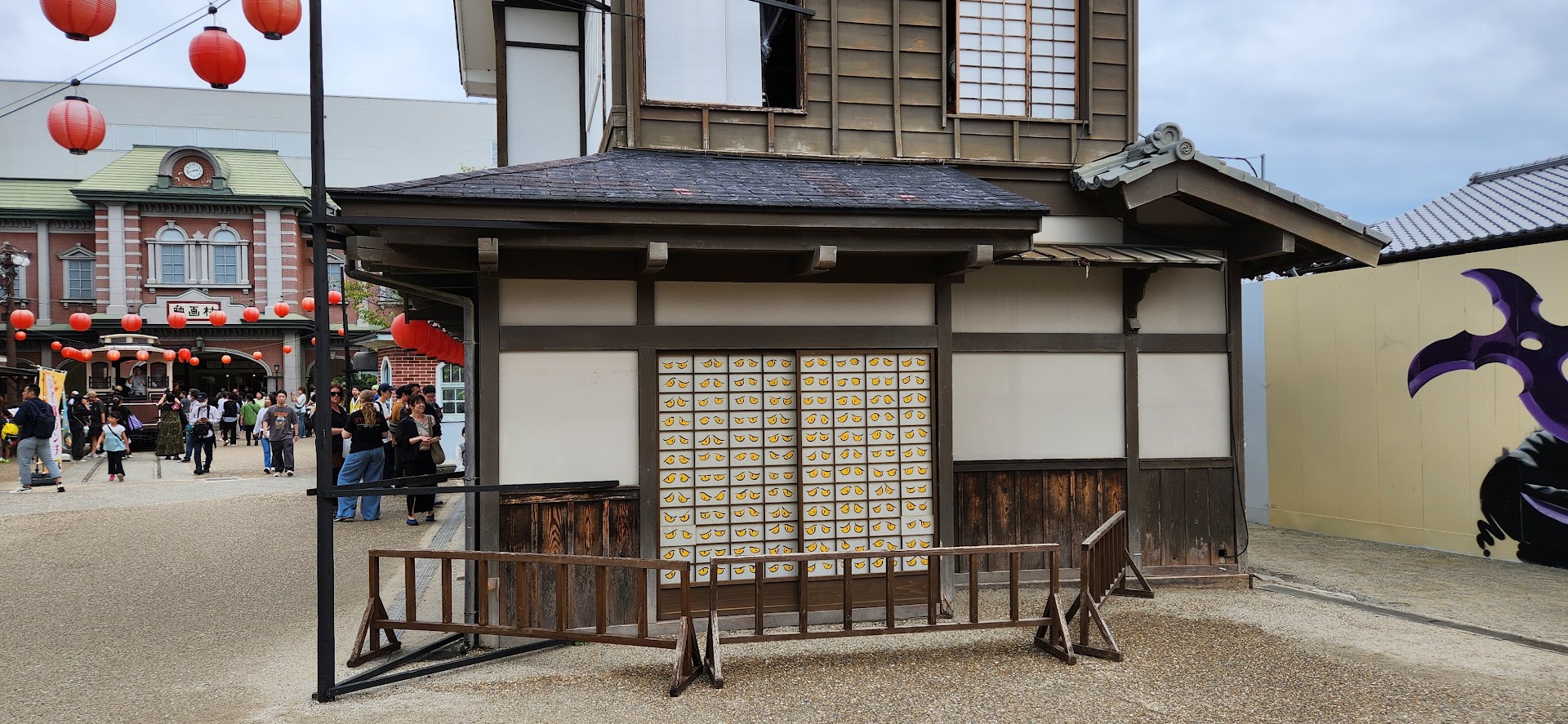
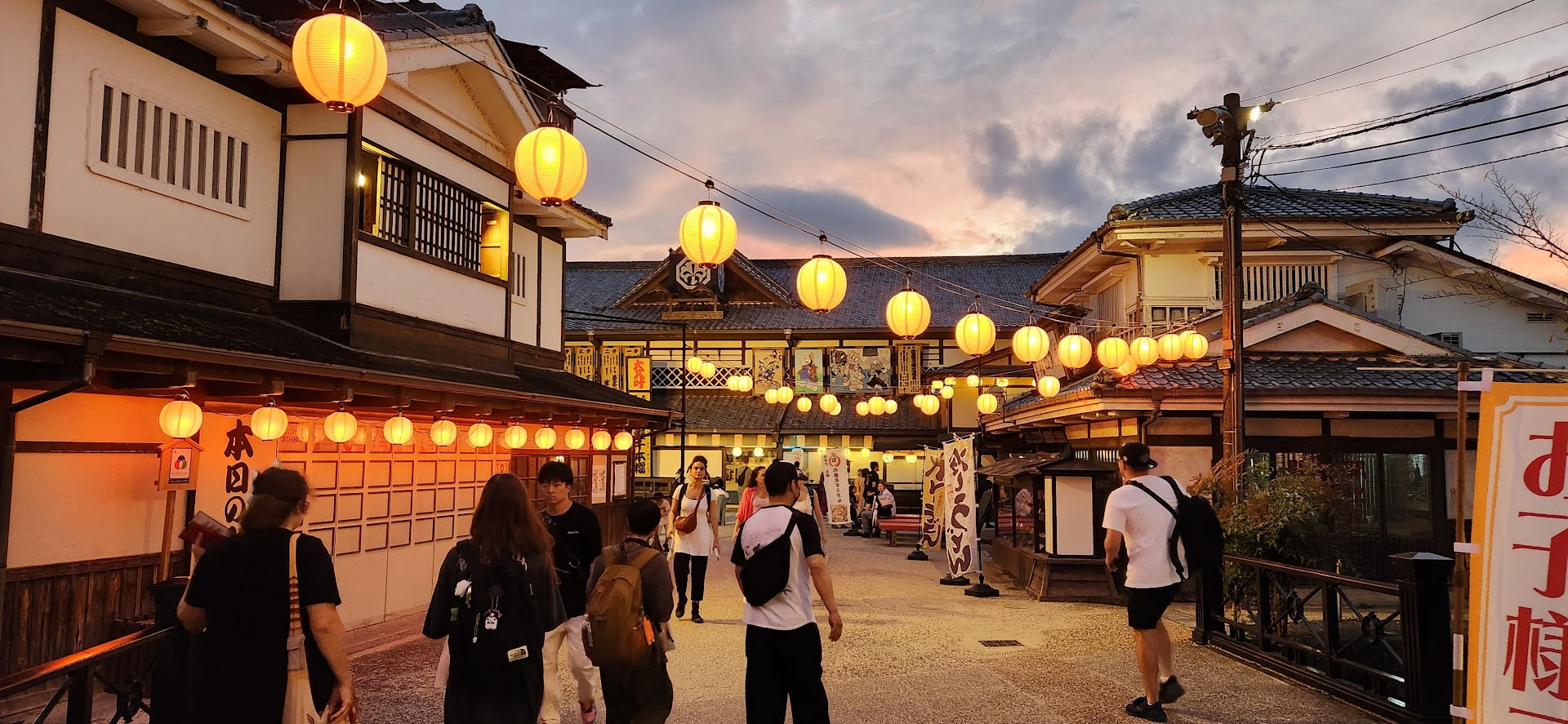
The event was so well attended that I barely had any time away from my booth, but I did manage to sneak away and take a few shots of yokai scattered throughout the park:

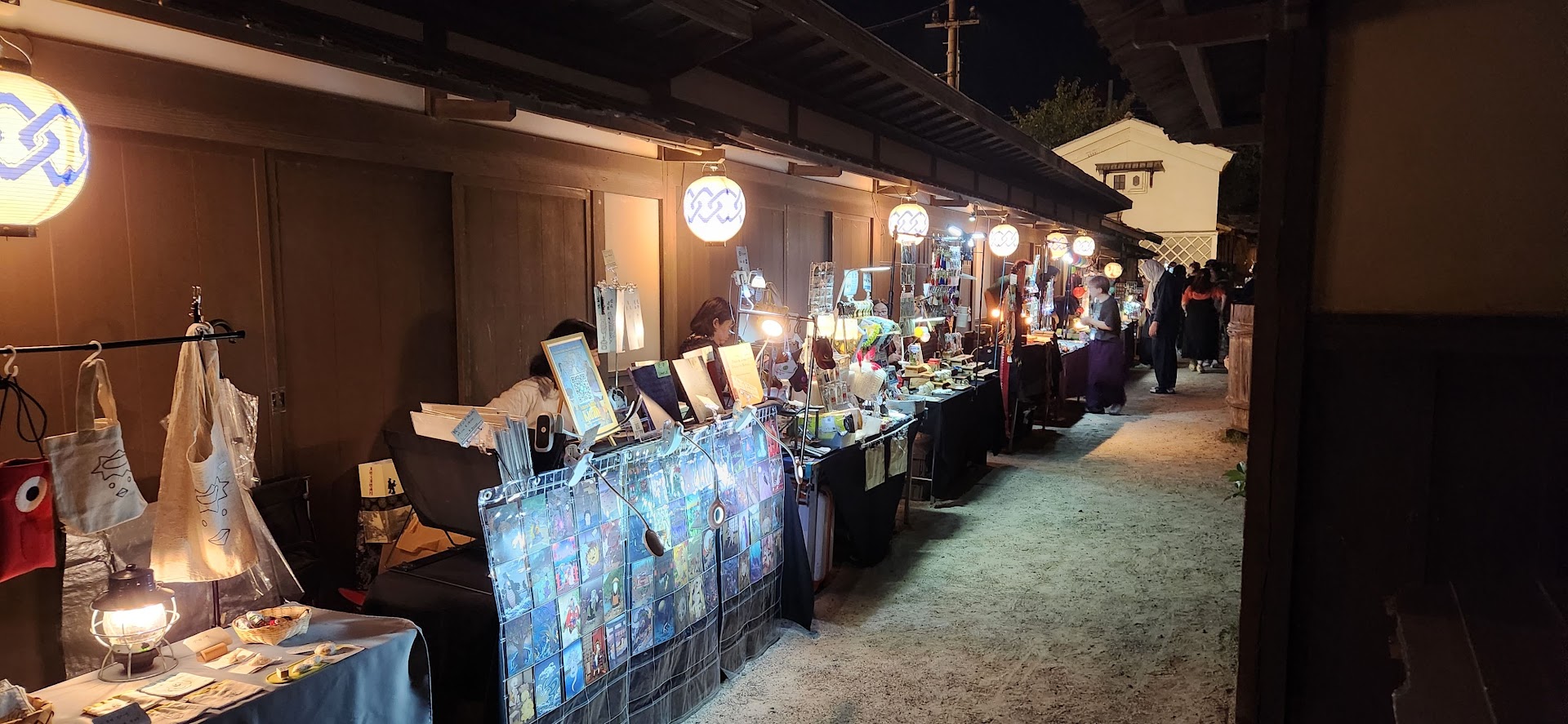
And some evening views of the park and vendor street:

Tonight’s story is especially fun because it’s both ghost story and a debunking of a ghost story. This reflects Negishi’s attitude to yokai and ghosts that he shows throughout Mimibukuro. He is cleary very skeptical of them, and sometimes even adds a few disclaimer-like sentences that show he is merely reporting what he heard, rather than reporting an actual ghost or yokai.

There is Truth Behind Ghost Stories

In the 6th year of Bunka (1809), the Year of the Snake, a glowing object that appeared every night on the embankment of Yanagihara became the talk of the town.

In the summer or fall of the previous year, there was an incident in which the fourteen year old daughter of Kahē of Kanda Konyachō was passing through the street during a rainstorm when some standing lumber toppled, and she was so surprised that she died from shock. Neighbors who went out at night to investigate the strange glow proclaimed it was the shadowy fire of her delusion left behind on earth.

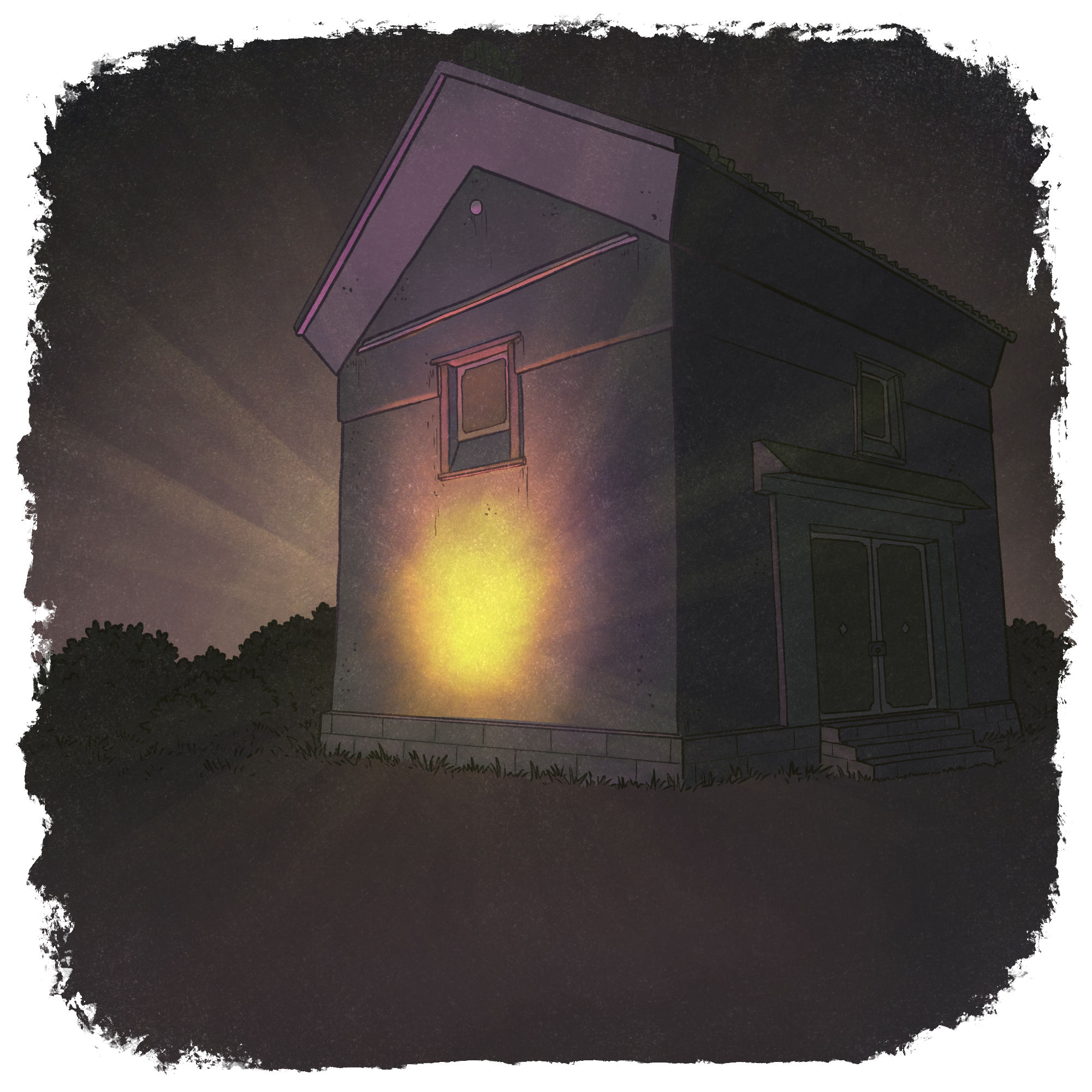
However, if we examine the facts carefully, we establish that a man named Ichibē, who worked at the Saburōbē Store in the same area as a hairdresser, owned an earthen storehouse about 3.6 meters square. He painted its walls with a plaster mixed with ash and, due perhaps to the strong oils in that mixture, the light from the lanterns held by people passing by was reflecting off of the walls and causing the glow.

Perhaps the plaster had been applied unevenly beneath the eaves of the storehouse, so that when a lantern passed by the light would suddenly reflect brightly, and this effect was greatly exaggerated by all who talked about it.

Whether because of that, or perhaps because there was some other damage, repairs were recently made on that storehouse. Scaffolding was erected, mats were hung, and so on, and this ghostly rumor vanished immediately.

A-Yokai-A-Day: The Ghost of Ippaku

This weekend I am in Kyoto for the KaiKai Yokai Festival and Mononoke Ichi yokai market. And while I would love to be able to paint these two days, this festival is super busy and there’s just no way to operate a booth as well as complete a painting. So I’m scheduling this weekend’s posts in advance just to make sure you are all supplied with yokai while I am away on business! I’ll also have photos to share of the festival after I get back, but for now please enjoy this preview of my upcoming book, Echizen-Wakasa Kidan!

(And if you haven’t checked it out yet, visit my Kickstarter for the book and check out what great rewards you can get if you back this project!)

Tonight’s story is from A Daimio’s Government, by W. E. Griffis. This is a neat one, because it was recorded by one of the first foreigners in Japan! Griffis lived in Fukui for a time, and there is a memorial to him along the Asuwa River in the heart of the city. The fact that one of the earliest foreigners to arrive in Japan was stationed in Fukui is a testament to the high status Fukui had in Japan prior to the 20th century. Below is not my own translation, naturally, as Griffis wrote this in English. But I did make a couple of edits for clarity.

The Ghost of Ippaku

Matsudaira Tadanao was in his youth a brave warrior, one of the first to scale the walls of Osaka Castle when Iyeyasu besieged it in 1615. He killed many enemies with his own hands, but in his old age he became very wicked, and treated the people very cruelly. In the book called Echizen mei seiki kō, a general guidebook and gazetteer of the Province in twelve volumes, nothing to the detriment of the house of Echizen was allowed to be published, but the people held many traditions of his cruelty, which I learned from them. It is said that Tadanao when once out hunting saw high in the air the vision of a lovely woman which so fascinated him that he dispatched emissaries to all parts of Echizen to find the original. A woman of surpassing charms answering to his description was found walking in the fields, and was brought to the prince, and he made her his concubine. She proved to be a demon in female human shape, and prompted her lord to to do many of his wicked acts. He had an unnatural passion for hacking criminals and animals in pieces with his sword. His chief delight was to rip up pregnant women to discover the details of fetal life. In all these, and other villainies, his concubine Ippaku encouraged him. To this day the rude peasantry of Echizen believe the spirits of the dead warriors killed at Osaka revenged themselves by entering into this woman Ippaku, and sending her to tempt, deceive and curse the house of Echizen.

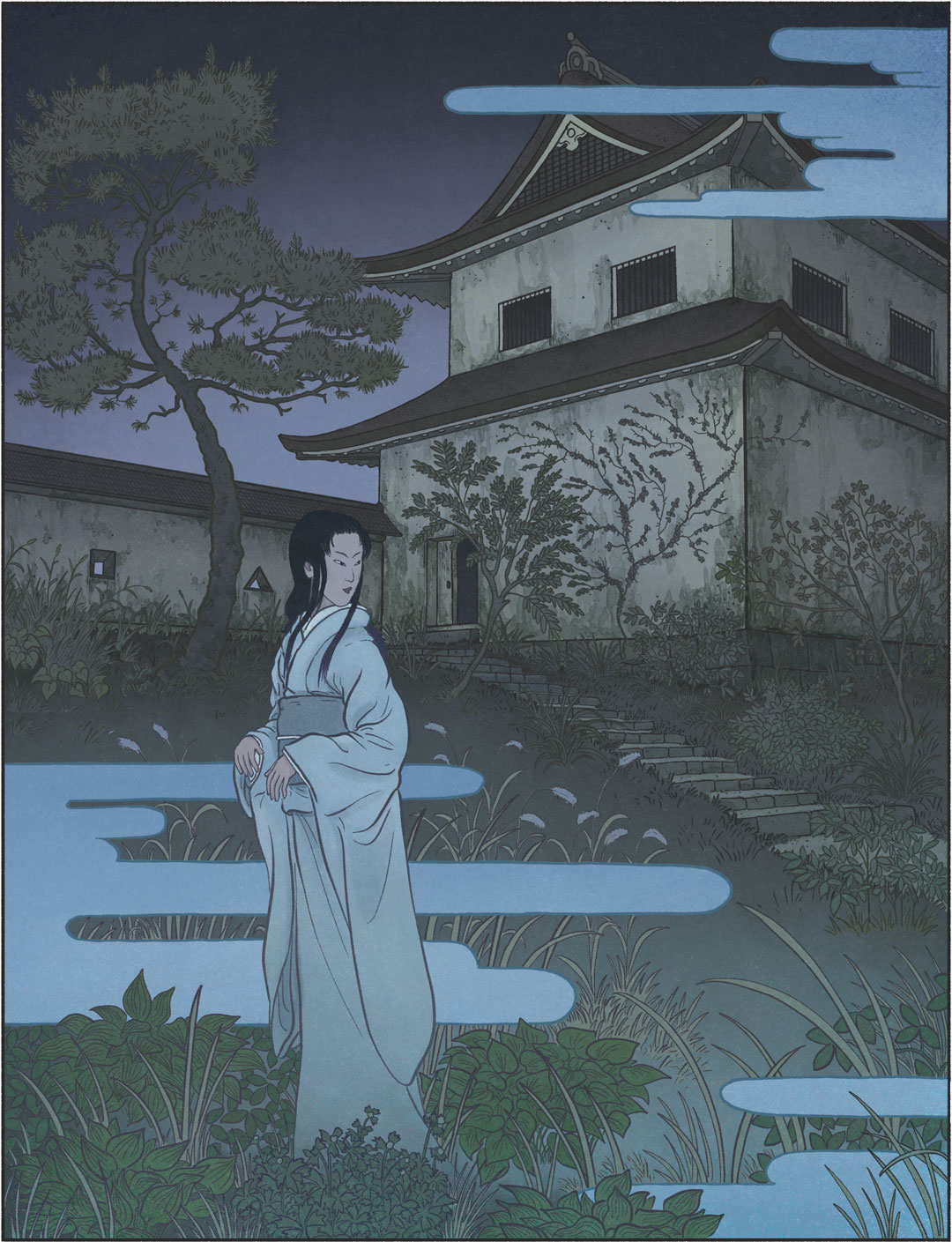
One mossy and overgrown part of Fukui Castle, kept always closed, was pointed out to me as the place where the ghost of Ippaku lurked. No one durst enter this. A few years ago, the people said, the prince sent a strong brave man to watch this gloomy nook at night. After long waiting, he saw at midnight, a lovely woman emerge from the tower, and face the damp and overgrown ramparts. Passing him, she said that she was the spirit of Ippaku, but that if he told anyone that he had seen her, he would shortly die. He then perceived her back was that of a hideous, slimy monster. The next morning, with loyal bravery, he related his experiences to his prince. A few weeks afterwards, he died. The common people and children believed that his death was caused by the spirit whose caution he had disregarded.

For his misgovernment, oppression, and wickedness, the shogun punished this first scion of the house of Echizen by reducing his revenue more than one half, leaving him but 325,000 koku, and assigning the other divisions of the province to subordinate daimyo.

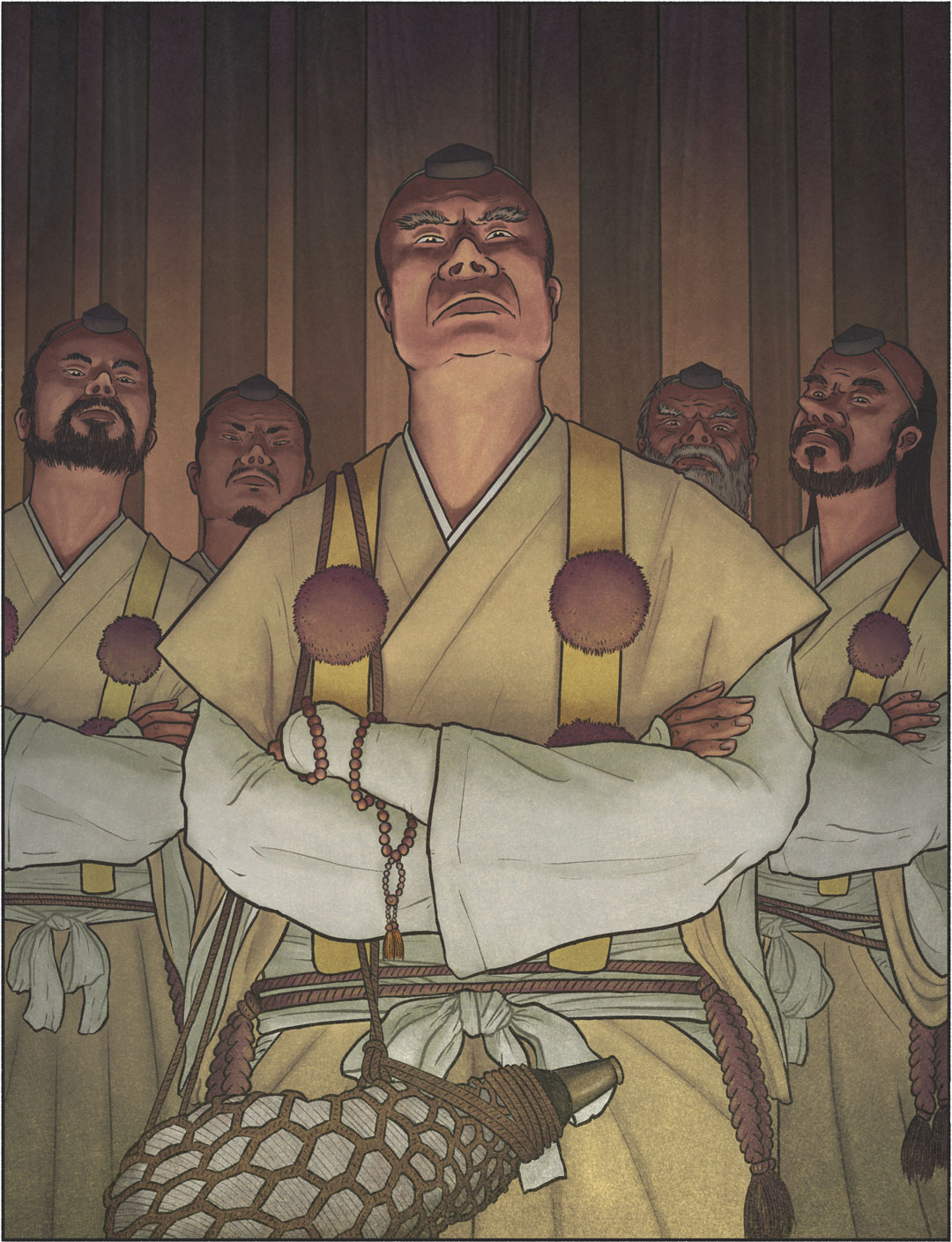
A-Yokai-A-Day: The Yamabushi of Takurayama

This weekend I am in Kyoto for the KaiKai Yokai Festival and Mononoke Ichi yokai market. And while I would love to be able to paint these two days, this festival is super busy and there’s just no way to operate a booth as well as complete a painting. So I’m scheduling this weekend’s posts in advance just to make sure you are all supplied with yokai while I am away on business! I’ll also have photos to share of the festival after I get back, but for now please enjoy this preview of my upcoming book, Echizen-Wakasa Kidan!

(And if you haven’t checked it out yet, visit my Kickstarter for the book and check out what great rewards you can get if you back this project!)

This story comes from an 18th century book called Kimama no ki. The translation below is not the final version from the book; it is just a rough draft that will be refined before publication.

The Yamabushi of Takurayama
This took place in Keichō 8 (1603), during the construction of Echizen Kitanoshō Castle (later Fukui Castle). A large number of laborers went into Takurayama (in Minamiechizen-chō) to cut down timber for the castle’s main gate. Then, out of nowhere, five or six burly yamabushi came to manager Ogasawara Rihei’s cabin and asked for tea.

Then they said to Ogasawara, “What is the reason for cutting down these trees? We know that the trees found here, so deep in the mountains, cannot be harvested just anywhere. We have made pilgrimages all over the country and we know all the history of the mountains and rivers. Why don’t you stop cutting down these trees?”

Ogasawara thought to himself, “Yamabushi would not come so deep into the mountains at this time. These must be tengu.” He replied, “The reason we are cutting down these trees is none other than to use them as materials for the construction of the castle of our lord, Yūki Hideyasu. The castle is for the preservation and security of the entire province, and not for any personal gain.”

Hearing this, the yamabushi said, “If you are cutting these trees for such a purpose, then even if you have to cut down all the trees on this mountain, it must be done. I have nothing more to say to you.”

With that, they took their leave and climbed up the mountain. Ogasawara thought it was strange, and he followed them with his eyes as they disappeared into the shadows of the trees, but lost sight of them after a while. There were many people on the mountain as well, cutting timber, and they should have seen the yamabushi, but not even one of them did. Ogasawara’s son, Rihei II, was there with his father at that time, though he was a young child, and he later recounted that he had seen these yamabushi.