A-Yokai-A-Day: The Ugume of Tsuru-no-hayashi

Comedy and horror go together like pizza and beer, and tonight’s story mixes the two together very well (comedy and horror, that is).

The story references a creature called an ugume, which is just a corruption of the yokai known as ubume. This is a complex yokai with a long history. While ubume is usually thought of as a ghostly woman (thanks to Toriyama Sekien’s illustration), it has a complex history and was originally depicted as a bird that screams like a human baby. In the end, however, the monster in this story turned out not to be an ugume, but something more mundane like aosagibi.

Now, there is some kind of bird living in the mountain just outside my studio that calls several times per day. It repeats three or four times in a row and it sounds like a screaming child. The call travels really far, so I can never see just what type of bird this is. I have no idea what it could be, but it’s got such a unique cry that I really want to figure it out. Listening to this bird so often yet never seeing it, it’s not hard for me to imagine the fear that people centuries ago might have felt at hearing unfamiliar, eerie cries coming from the forests.

The Ugume of Tsuru-no-hayashi

Around the first year of Kan’ei (1624), there was a mausoleum called Tsuru-no-hayashi in the eastern part of Kyōto. Every night a monster called an ugume would come here and wail like a crying infant. Nobody dared pass by after dark, and the back gate was locked up tight so that nobody could enter.
One person heard about this and said, “I will go see this for myself.”

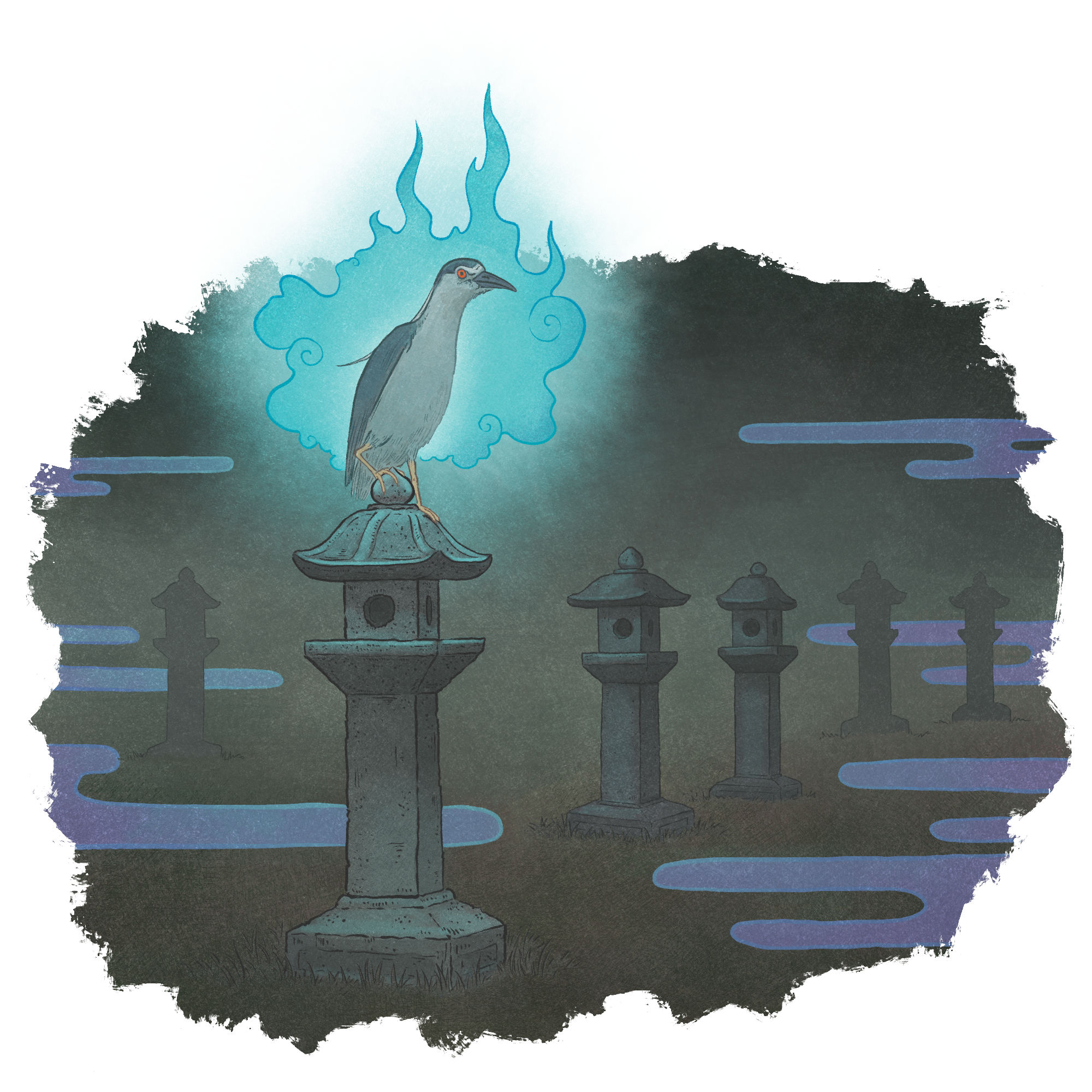
So, one rainy night when there was a sense of dread in the air, he went to Tsuru-no-hayashi and waited for the ugume. Sure enough, at the fifth hour (around 8pm), a blue flame about the size of a parasol floated up from the direction of the Shirakawa River. As it drew near, just as people described, there was the sound of a crying infant. The man drew his sword and leaped at it, cutting it in two. The pieces fell with a thud, and he stabbed them again, shouting in a loud voice, “I killed the monster! Come here! Come here!”

The people nearby lit torches and gathered to see. It turned out to be a large night heron. Everyone burst into laughter and went home, saying that it was a silly thing to be frightened of.

Count Down to Launch!

Hey everyone! We’re just over two weeks away from the launch of my next Kickstarter. How exciting!

This October, in addition to A-Yokai-A-Day, I will be running a Kickstarter to launch my newest book Echizen-Wakasa Kidan – a book of yokai, ghosts, and strange tales from Fukui Prefecture.

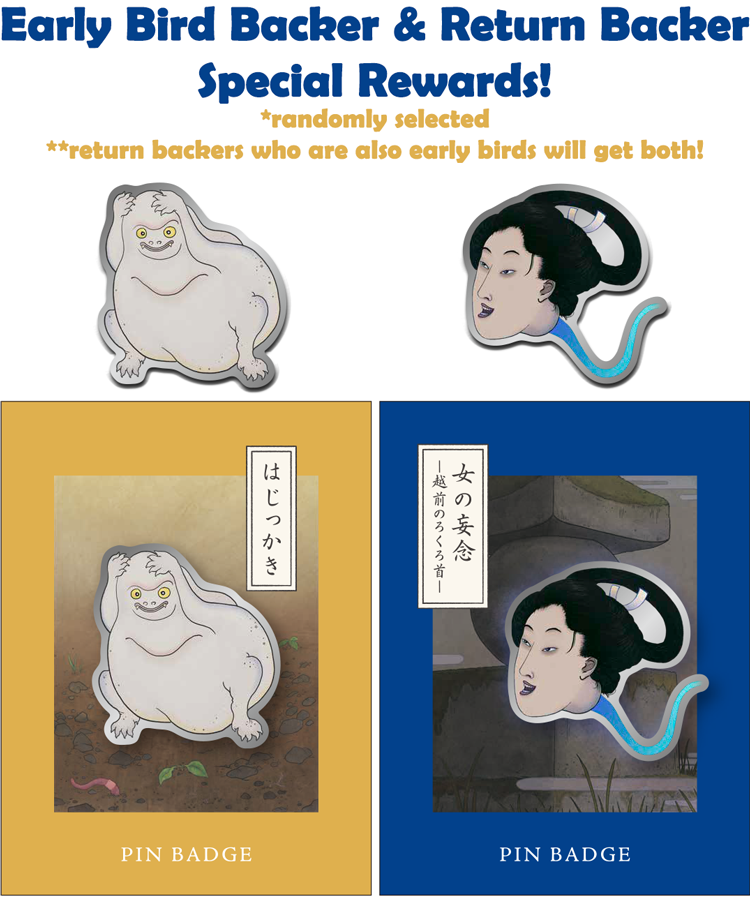
What’s even cooler is that we have special rewards for return backers and for early bird backers: a free yokai metal pin badge! If you back during the first day of the campaign (October 1st), you will get a free pin badge of either a hajikkaki or a rokurokubi! And, if you have backed one of my previous Kickstarters, you’ll also get a pin badge! (If you are a return backer AND and early bird backer, you will get both!)

But perhaps most exciting of all, I will be also offering unique add-on rewards only available during this Kickstarter. These rewards are made by local artisans here in Fukui who are experts in the ancient, traditional crafts produced in this prefecture for centuries.

This is the first time I’ve collaborated with local craftspeople to produce traditional, artisanal goods, but it is something I have wanted to do for many years. Here’s a sampling of the rare goods I will be offering during the Kickstarter:

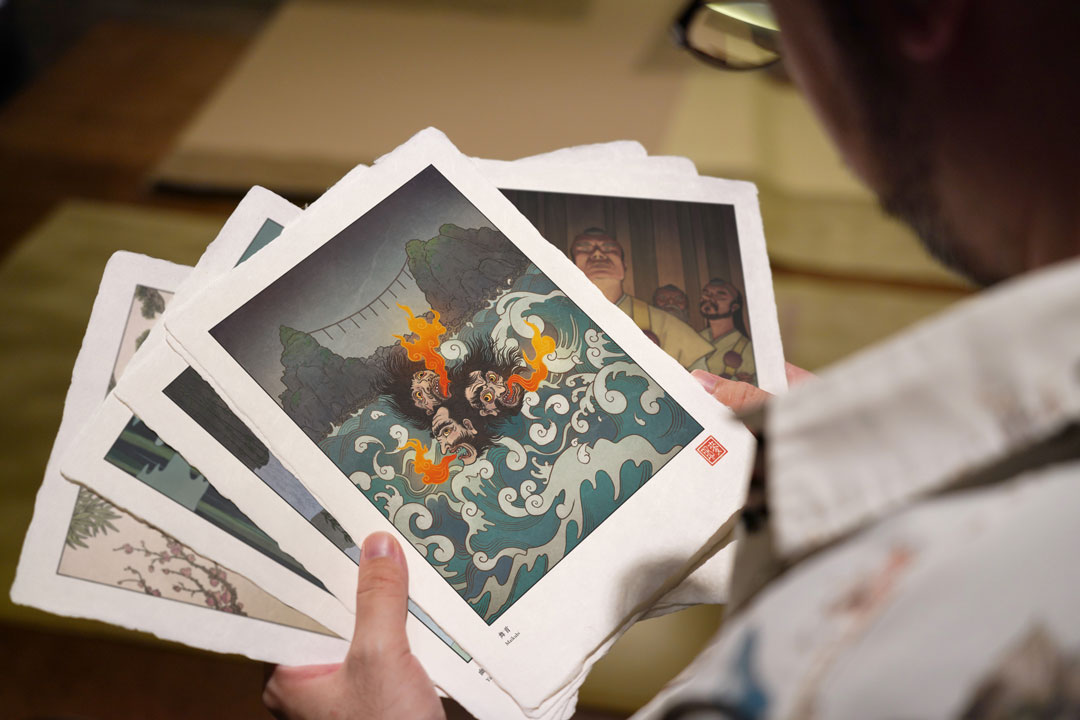
washi art prints of my yokai paintings

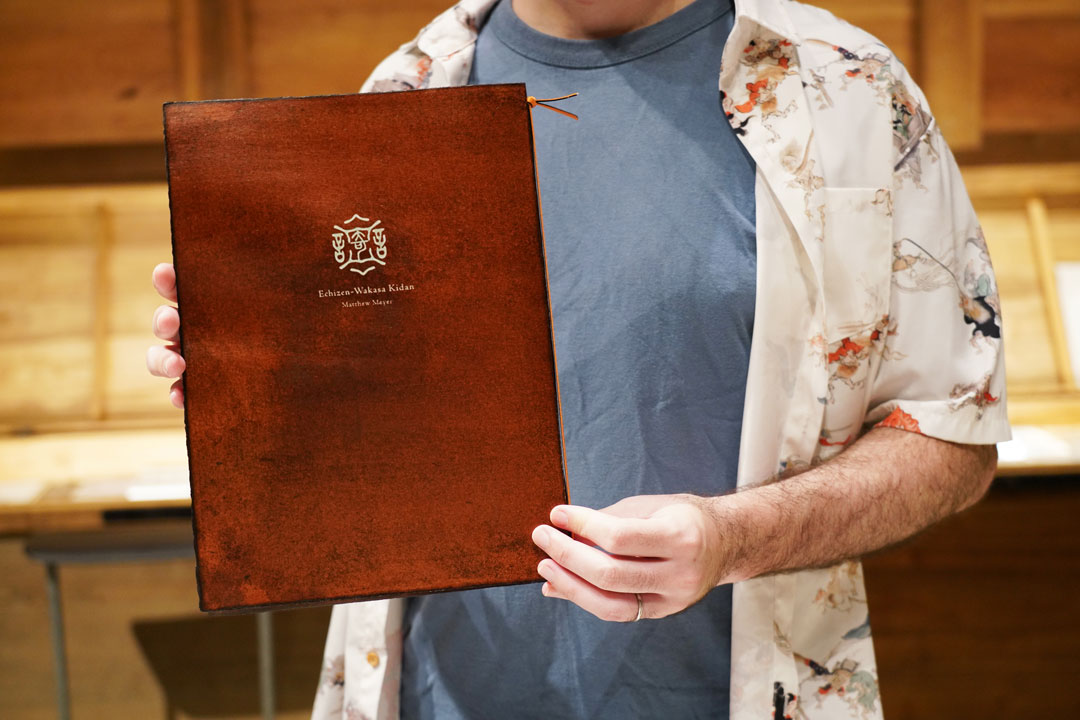
a lacquered wash art book with 10 large format prints on washi paper

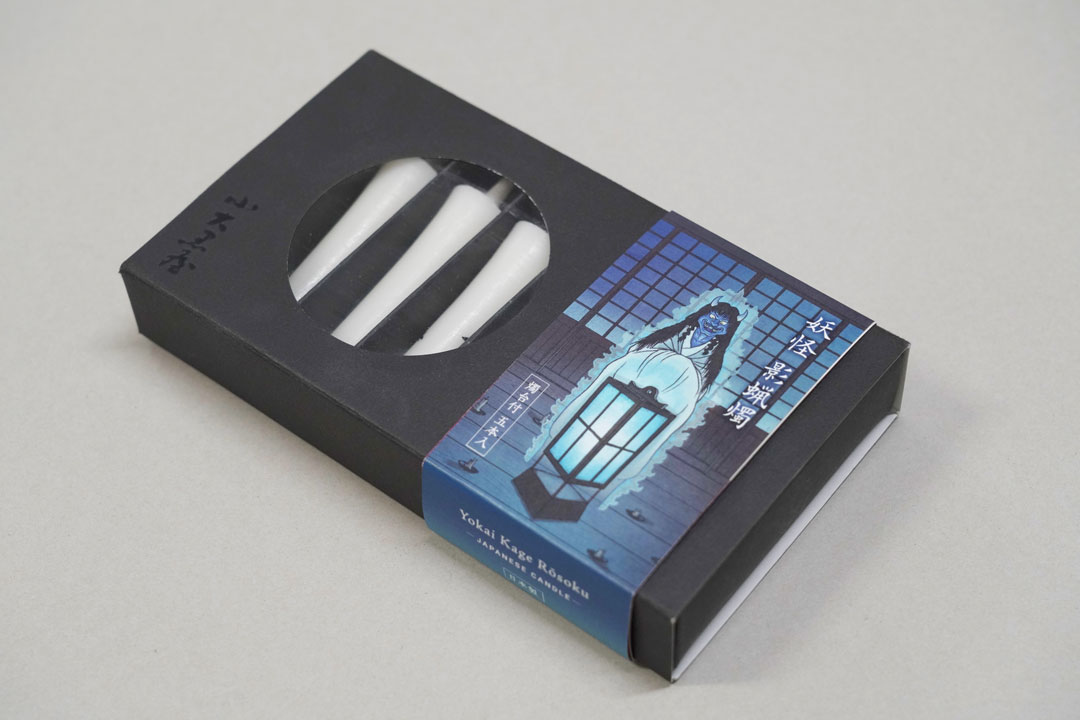
traditional warōsoku candles with yokai on them

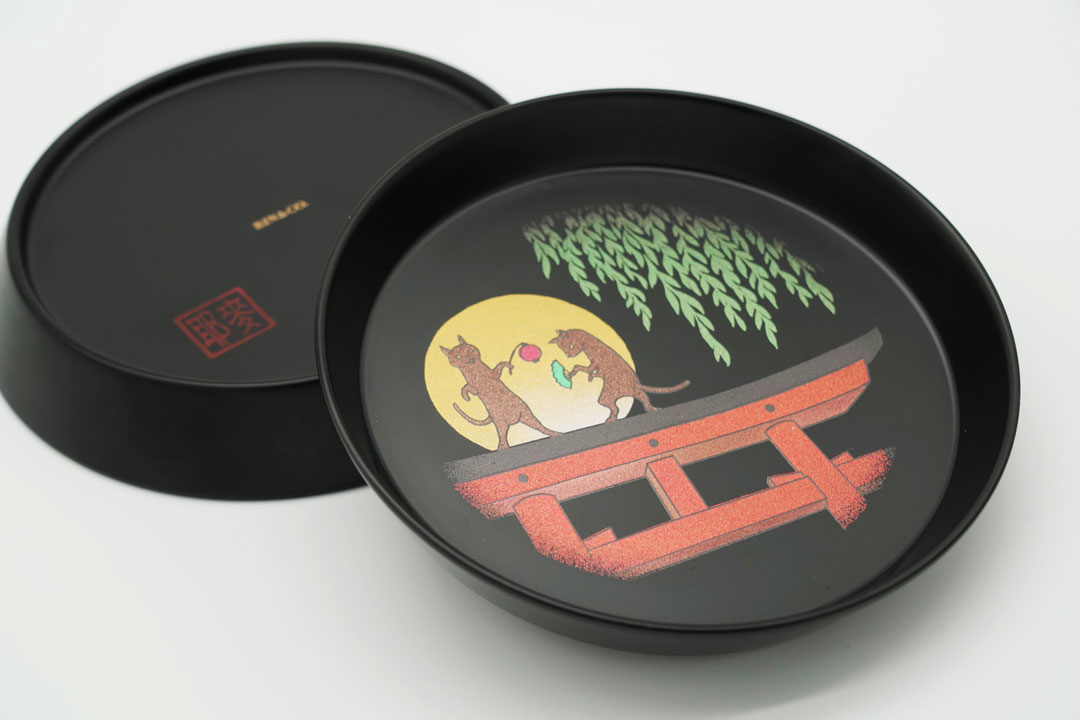
a hand-carved lacquerware dish with a bakeneko

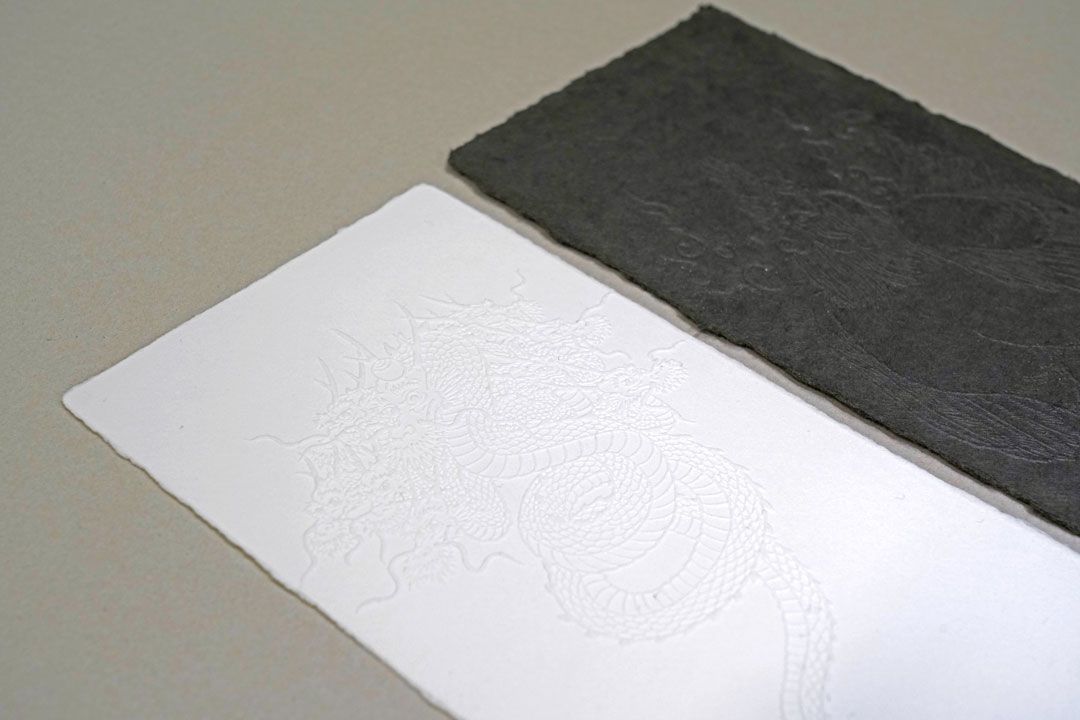
a set of two embossed washi bookmarks featuring yokai from the book

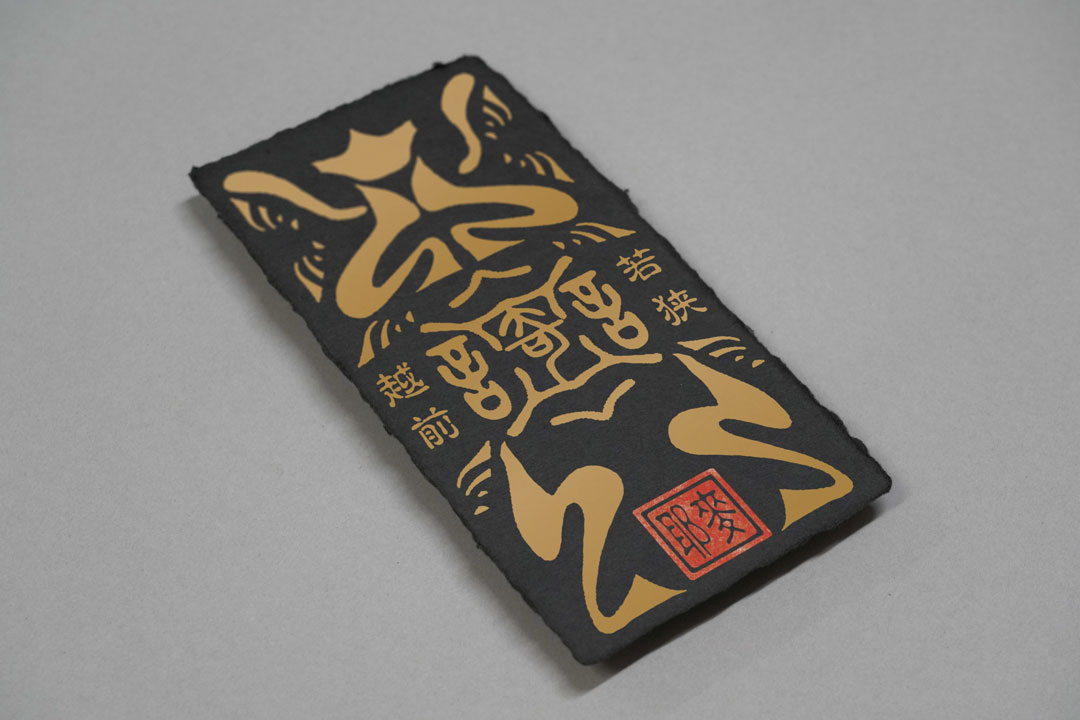
the reverse side of the bookmarks is designed in the style of a protective amule

And these are all in addition to the book, of course, which will be available in ebook, paperback, and a special artisanal hardcover using the finest materials available.

So don’t miss your chance! Sign up for a notification and be ready on October 1st when the campaign launches!

Yokai in Kanazawa

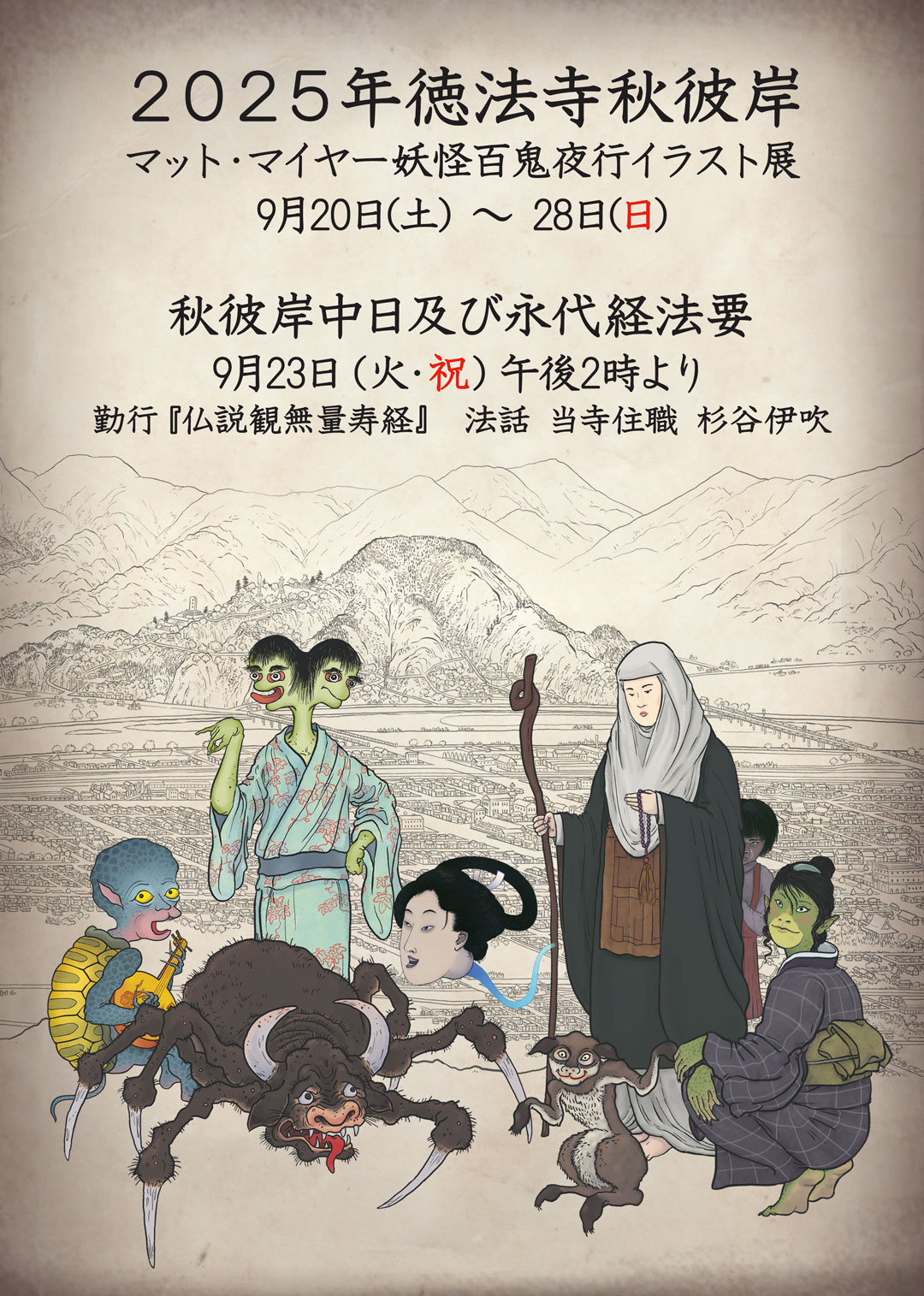
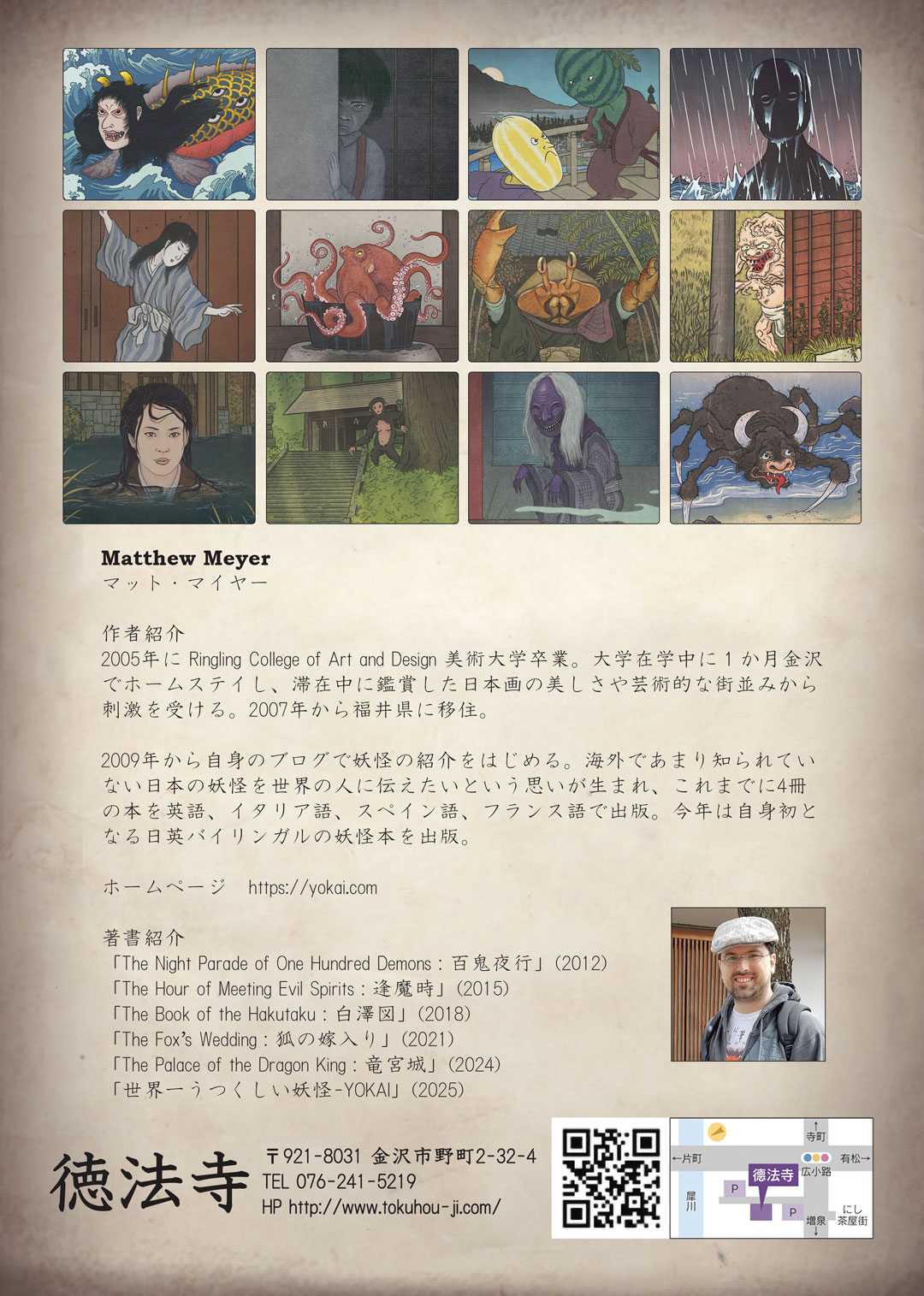
My next exhibition this year is coming up soon. This time in Kanazawa, at Tokuhōji temple.

Here is the poster:

I had an exhibit at Tokuhōji two years ago during the spring, and I am happy to be going back there. Kanazawa is a lovely town, and Tokuhōji is right in the middle of the old “temple town” of Kanazawa, full of old building, temples, and winding paths. It feels like a slice of old Japan in the middle of a modern city.

The exhibit is only a week long, but if you’re in the area I hope you’ll check it out!

Happy 2025!

Happy New Year, readers!

2024 was a busy year, focused on fulfilling the Kickstarter, several art exhibitions, the first ever KaiKai Yokai Festival at Toei Kyoto Film Studios, and work on upcoming projects. The last of the Kickstarter orders for The Palace of the Dragon King shipped out in December, and it was such a great feeling to close off the year that way!

2025 is going to be an exciting year too, with several new projects coming out, and a new Kickstarter probably this fall! I’ll post about them here, but you can be among the first to know about them by following my Patreon or my Bluesky account (I have left X, Facebook, and Instagram, so you won’t find me there anymore).

Speaking of my new book, you can now order it from Amazon (affiliate link) or the Yokai.com webstore! Currently only the ebook is available on Amazon, while you can get signed copies and limited editions, as well as the super awesome Servants of Ryugu poster from Yokai.com.)

The Palace of the Dragon King (2024)

Japan is a nation spread out over fourteen thousand islands, so it is no surprise that its relationship with the sea is embedded deeply within its legends and folklore. According to mythology, the islands of Japan emerged from the depths of the primordial sea when the first gods stirred the waters with a spear. This illustrates the importance of the ocean to the development of Japan as both a country and a culture. It is a force that birthed and has sculpted its landscape, influenced its history, and inspired its imagination.

Yōkai—spirits and monsters found in Japanese folklore—reflect the complex relationship between Japan and the sea over its long history. The sea has served as a conduit for cultural exchange with continental Asia while also isolating Japan and allowing it to foster a distinct national identity. It has acted as both a protective barrier, shielding Japan from foreign invasion, and a destructive force, unleashing devastating tsunamis upon its shores. It is a vital source of sustenance, providing fish and seaweed that sustain the nation’s diet, yet it is also a realm of mystery and danger. These aspects are reflected in the number and diversity of aquatic yōkai. Some are playful, others are deadly; some grant wishes, others destroy; some bring terrible curses, and others provide divine protection.

This manual contains over 100 illustrated entries divided over five chapters that cover a wide variety of Japanese spirits, with a heavy focus on aquatic yōkai and maritime myths. Each creature is described in detail, including its habitat, diet, origin, and legends based on translations from centuries-old Japanese texts.

A-Yokai-A-Day: The Woman Who Every Night Visited Usa Hachiman in Buzen Province

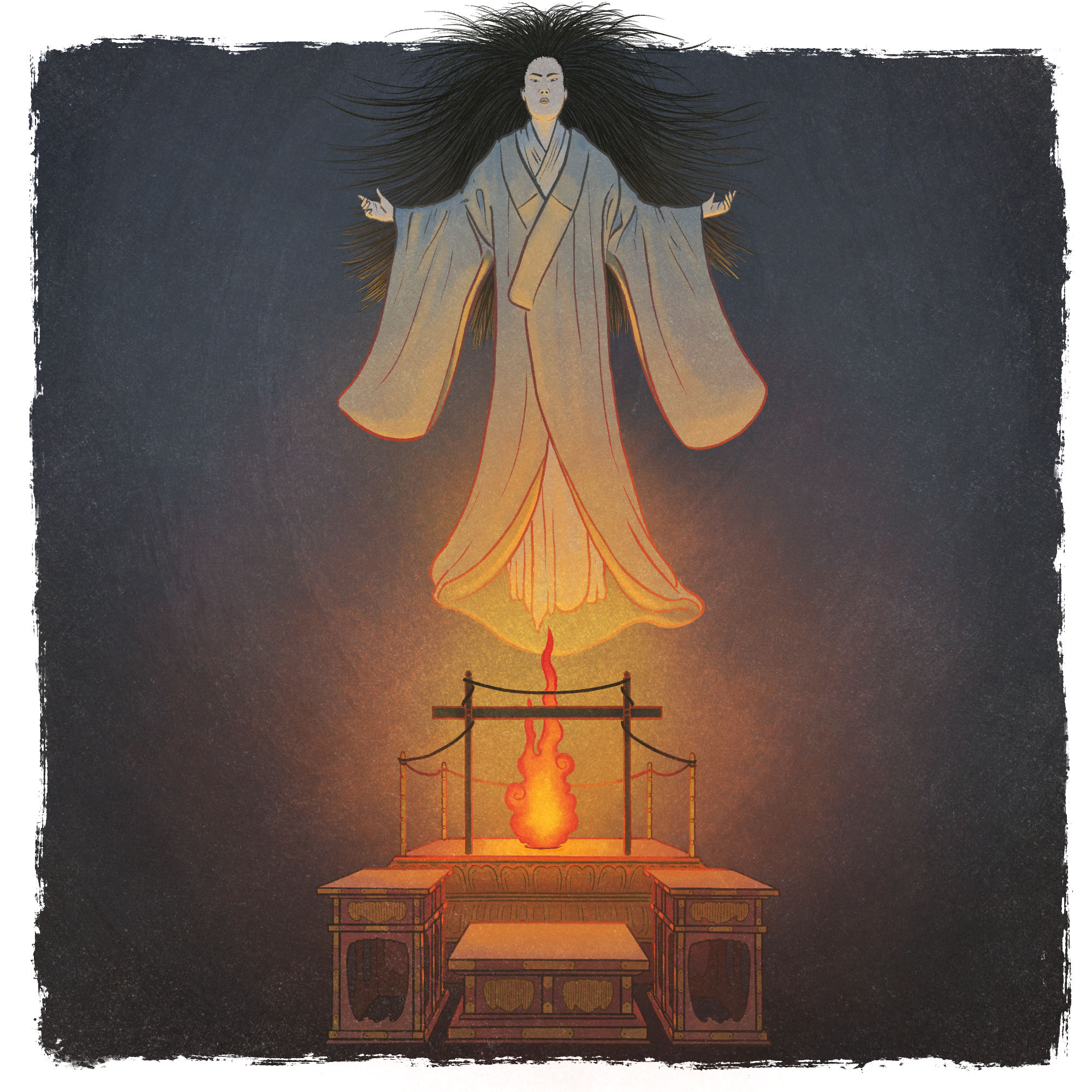
Tonight’s story depicts a legendary ritual known as “the shrine visit at the hour of the ox.” This ritual is famous today for being a curse ritual. It is performed by jealous or jilted lovers who want revenge — either against the former lover who betrayed them, or against the person who stole their lover from them. The hashi hime of Uji, Kyoto is a famous example of someone who used this ritual to powerful effect.

To perform this ritual, one dresses up like a ghost: wearing a white burial kimono, and carrying a light source on their head (usually in the form of candles stuck onto an upside-down trivet, or holding a torch in their mouth), and wearing tall geta sandals. The ritual is performed at the hour of the ox, which equates to between 1 to 3 am in western time.

While this ritual is known today as being a curse ritual, long ago it wasn’t restricted to curses. The shrine visit at the hour of the ox was originally performed for very strong, sincere wishes, like the one we see in the story below. For an extra powerful dose of magic, you can perform it during the year of the ox, during the month of the ox, on the day of the ox, and at the hour of the ox — but you’d have to have time on your side to get such a perfect line up.

The Woman Who Every Night Visited Usa Hachiman in Buzen Province

In Buzen Province, about 2 kilometers north of Usa Hachiman-gu Shrine, there is a mausoleum. There is a rumor that a henge comes here every night. One night, a group of young men gathered there and asked, “Who wants to go and see it?”

But not one of them said they were willing to go. Among them was a brave samurai who said, “I will go,” and, boasting about his courage, went off to the mausoleum all by himself. He sat in the shadow of some trees and waited for the henge to arrive.

It was dark and rainy, and it could not have been any more creepy. Just then, he saw a faint light floating towards him from about 1 kilometer away. “Aha!” he thought, and loosened the bindings on his sword and waited for it to approach. The light grew closer until it was seven to nine meters away. Looking closer, there appeared a woman of around 20 years in a burial kimono, her disheveled hair reaching all the way to the ground, wearing an iron trivet with candles on it on her head and tall wooden sandals on her feet.

The samurai thought he would cut her down and discard the body, but then he remembered that he was here to investigate, so he waited off to the side and observed. The woman entered the crematorium, burned something for a while in the embers, then came out and went back to the road to leave.

The samurai wondered what she was up to and went to stop her. He grabbed her tightly from behind, and the woman said, “Oh how sad… now my wish will not come true.”

The samurai was startled, and said, “So, you are human! Tell me what you are doing!”

The woman replied, “I am ashamed to say this, but my husband, due to some karmic causality, has been suffering from a horrible illness, and all treatments have had no effect. In my grief, I fasted in prayer at Usa Hachiman-gu for seven days. At dawn on the seventh day, Lord Hachiman appeared to me in a dream and instructed me: ‘For one thousand days, at the hour of the ox, go to the graveyard and eat mochi baked in the embers of the cremated dead. Your husband will then fully recover from his terrible illness.’ Since then, I have done as instructed and come to this mausoleum every night for the past three years. In four or five days my wish would have been fulfilled, but grievously it has all been in vain. Please help me. I am no monster.”

Hearing this, the samurai said, “Well, there’s no mistake; you are a human. I will help you. But first, to prove to everyone that I was here…” And he grabbed a fistful of the woman’s hair and cut it off.

Then he went back to the inn and told everyone, “I captured the henge and subdued it, then in exchange for its life, I cut its hair and came back here.” And he threw the fistful of hair at them, and they were all amazed.

A-Yokai-A-Day: The Apparitions in Yoshida Sōtei’s House; or, The Power of Poetry

I’m back from Kyoto’s Uzumasa film studio. It was an exhausting event, but really fun! According to the studio, it was the greatest attendance the park has seen in 20 to 30 years! This just goes to show the international appeal of yokai, and how they’ve become a major tourism force in recent years, especially during the Halloween season.

Tonight’s A-Yokai-A-Day is another story featuring poetry, and like the previous story about poetry, I have to grumble a bit about translating Japanese poems into English.

The poem in this story comes from a famous piece of Japanese literature witten over 1000 years ago: Makura sōshi. The poem describe’s a fisherman’s boat returning home:

“I see someone rowing on the sea; a fisherman returning with his catch.”

However, the monk in this story recites this story using homophones that change the meaning entirely:

“I see something I yearn for in the embers; a frog hanging in the rain.”

The poem works like a magic spell, with the power to recall the spirit back to wherever it came from. It’s a testament to the monk’s wisdom and wit that he able to find the right classical poem and extract a line from it, changing its meaning to apply to this particular situation.

It’s not an easy reference to get. There’s no way to translate it into English in a way that retains the reference, and it doesn’t make much sense without an idea of how highly regarded poetry has been throughout much of Japan’s history, that it should have such an effect on evil spirits. So I hope you can enjoy the story better with this little cultural note.

The Apparitions in Yoshida Sōtei’s House; or, The Power of Poetry

In Murakami, Echigo Province, there was a wealthy merchant named Yoshida Sōtei. Strange apparitions suddenly began appearing in his house.

On the first day, four or five cute chigo appeared in the northwest corner of his warehouse and sang an unfamiliar song for a while, then vanished. The next day, at dusk, a handsome samurai appeared with six others. They all drew swords and fought, and everyone was killed. Upon inspection, they all had turned into ashes. On the third day, a beautiful lady around 16 years old, her head covered in a light kerchief, made a showy entrance, spread her fan and performed a popular dance, and then vanished into thin air.

Sōtei was worried about this, and asked high priests and monks to perform various exorcisms and prayers for him. This perhaps had some effect, as nothing happened for four, five, or six days afterwards; but on the seventh day, when a fire was lit in the sitting room hearth, a single tree frog appeared in the fire. Everyone was startled, and they took the frog out of the fire and released it, but then another one appeared in the fire, and then another, and it never stopped. Sōtei was so distressed that he called a certain pious Zen monk and asked him for help. The monk, seeing the situation, faced the hearth and recited a single poem:

“I see something I yearn for in the embers; a frog hanging in the rain.”

The frog vanished, and nothing strange happened again. This is truly the power of waka poetry.

A-Yokai-A-Day: The Tanuki Who Summoned 25 Bodhisattvas

I was at Kyoto Toei Film Studios all day today for the KaiKai Yokai Festival, so tonight’s write-up will be brief… Thanks to everyone who came to my booth at the festival today!

Tonight’s story is for all the readers who have been outraged at all the stories about samurai killing tanuki, foxes, and snakes so far. Tonight the animals get their revenge!

The Tanuki Who Summoned 25 Bodhisattvas

In eastern Ōmi, there is a place called Sakōtō Village. Deep in the mountains, there is a temple. Whenever the priest of this temple would visit the village, a tanuki would follow him and steal his food to eat.

One time, the priest picked up a mochi-shaped stone in Yokawa and took it home, roasted it on his hearth, and waited for the sun to set. Just as he expected, a tanuki came and started searching for food in the usual places.

“If you stop stealing from now on, I will give you a present,” said the priest. Then he picked up the roasted stone with fire tongs and tossed it at the tanuki. When the tanuki grabbed it and tried to eat it, it suffered severe burns and ran away.

Afterwards, the idol on the altar would sometimes glow with a bright light. The priest thought it was a holy sign, and he became even more devout.

One night, the Buddha appeared to the priest in a dream and commanded him, “When you wake up from this dream, you should throw yourself into the fire and attain buddhahood. I will then come for you and take you away to the Western Pure Land.”

The priest woke up and, thinking it was a holy sign, told everyone around, “On an appointed day, I shall walk into the fire and leave this world. Come and witness!”

Everyone around wept and said, “Oh my, what an admirable thing.”

When the day came, a huge crowd of worshippers from all over the country gathered, all of them waiting to see the coming of the Buddha. The priest had built a 1.8 meter square stone fire pit and stacked it full of charcoal and firewood. Wearing new white robes and a kerchief, he climbed onto the pyre and began to pray. Sure enough, around noon, from the west came a procession led by the Buddha triad of Amitaba, Kannon, and Seishi, followed by 25 other bodhisattvas playing the shō and hichiriki, and giving off shining light.

“Light the fire!” said the priest.

The fire was lit, the pyre went up in flames, and the priest burned to death. Meanwhile, the procession of buddhas revealed their true form and burst out in roaring laughter. Everybody was shocked to see two or three thousand old tanuki running off into the mountains. The tanuki that was burnt by the stone got its revenge.