Shukaku (hi-res files)
Reply

Greetings yokai fans!
I hope those of you in the US have had a happy Thanksgiving! In Japan, we have Labor Thanksgiving on the same day, but it doesn’t really resemble the holiday in any way. Still, its nice to have a day off to cook some stuffing and mashed potatoes!
Actually, I visited Kyoto on Thanksgiving here, and I found an interesting sight. At Kiyomizu Temple there was a small shrine dedicated to removing curses. I took a few photos to share with you guys:
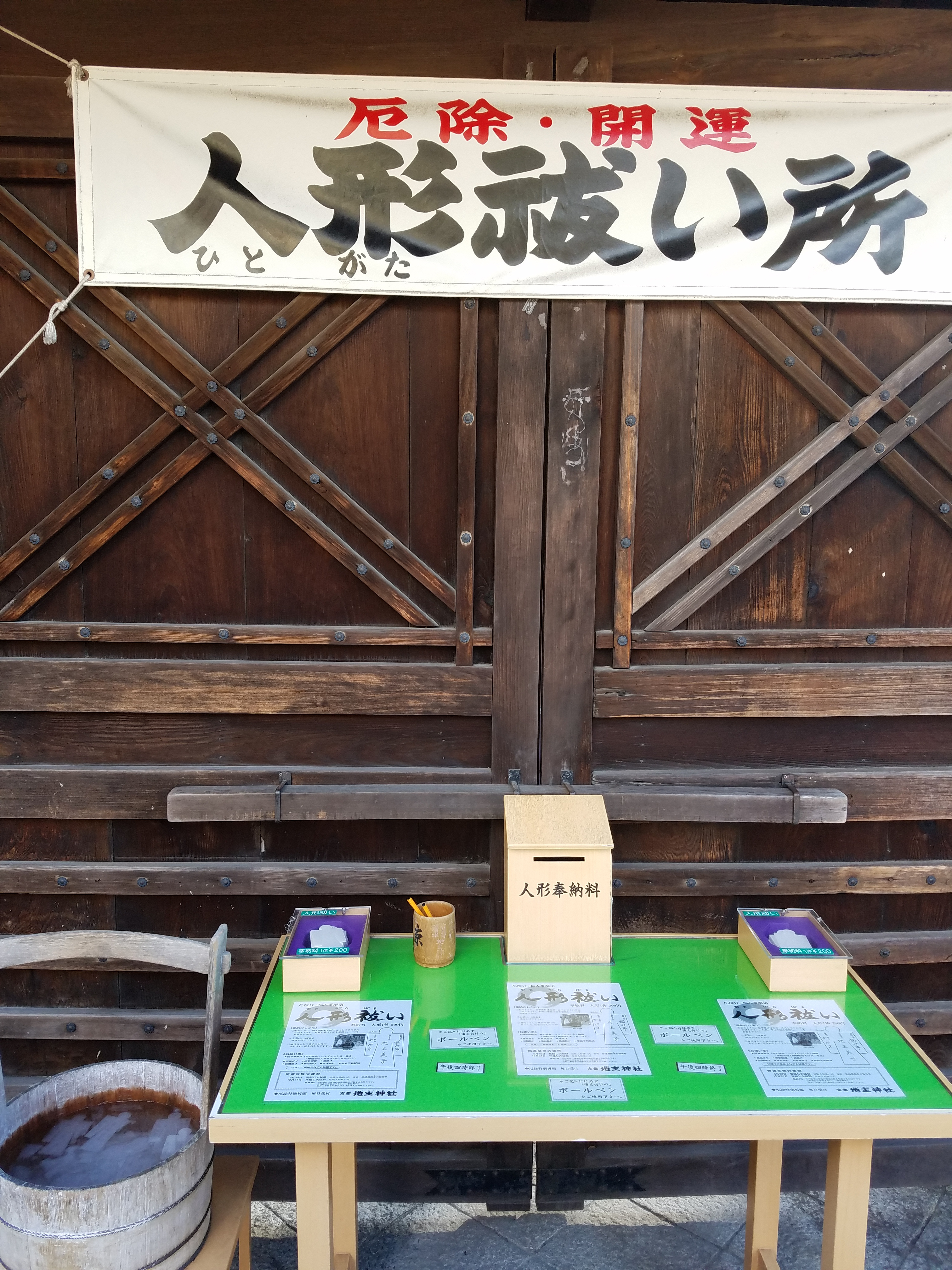
This is a kind of “curse disposal area.” If you suspect you’ve been cursed, you can write down your name and birthday on a paper doll and drop it into the water.
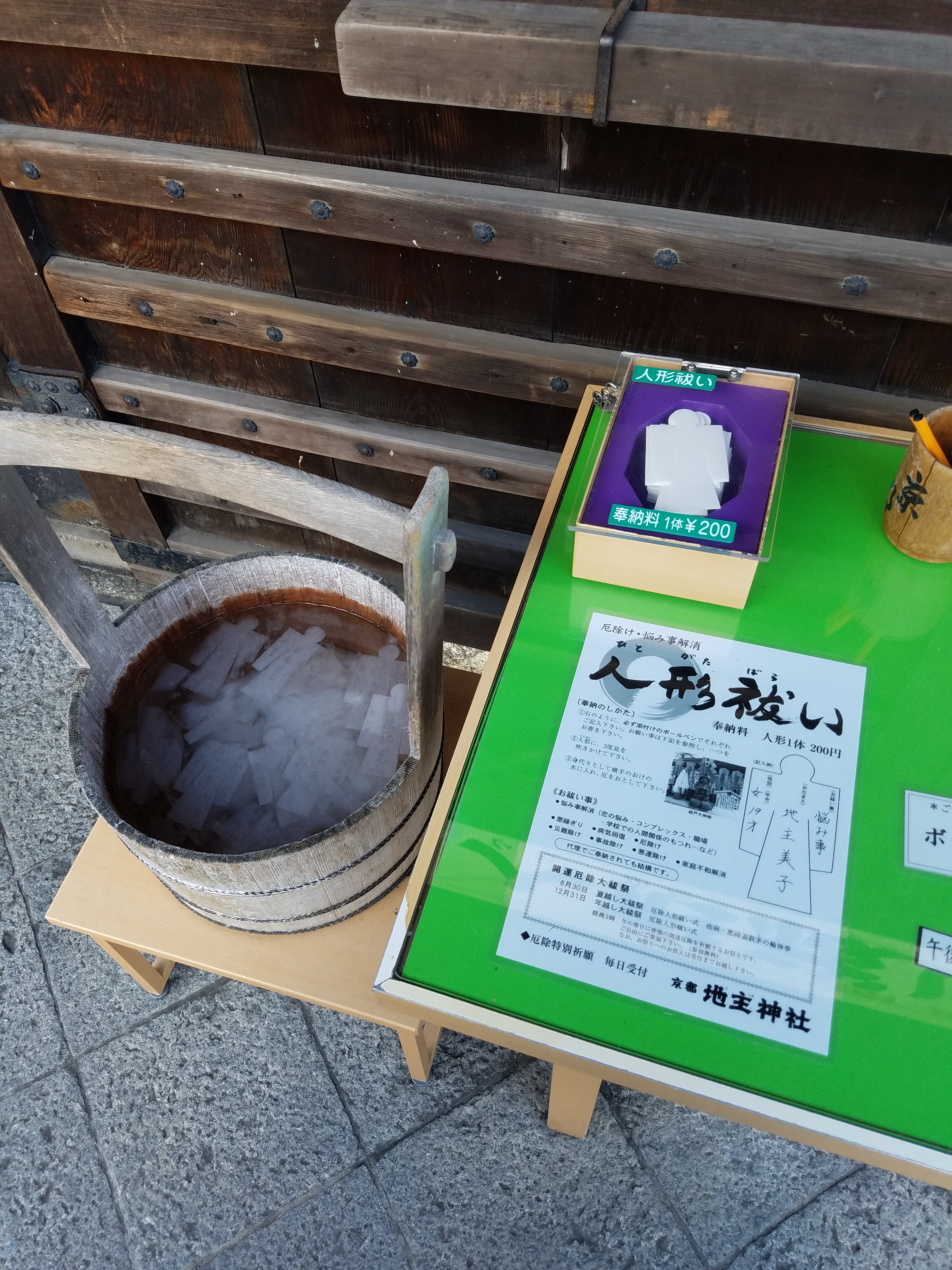
The paper dolls will slowly dissolve in the water, taking your curse with them! You may remember reading in The Hour of Meeting Evil Spirits about this exact sort of thing. In old times, curse dolls would be tossed into rivers to purify them; today, with concerns about pollution, a water bucket is a much more eco-friendly solution!
Interestingly, that’s not the only curse-related area in the shrine. Check out this tree below:
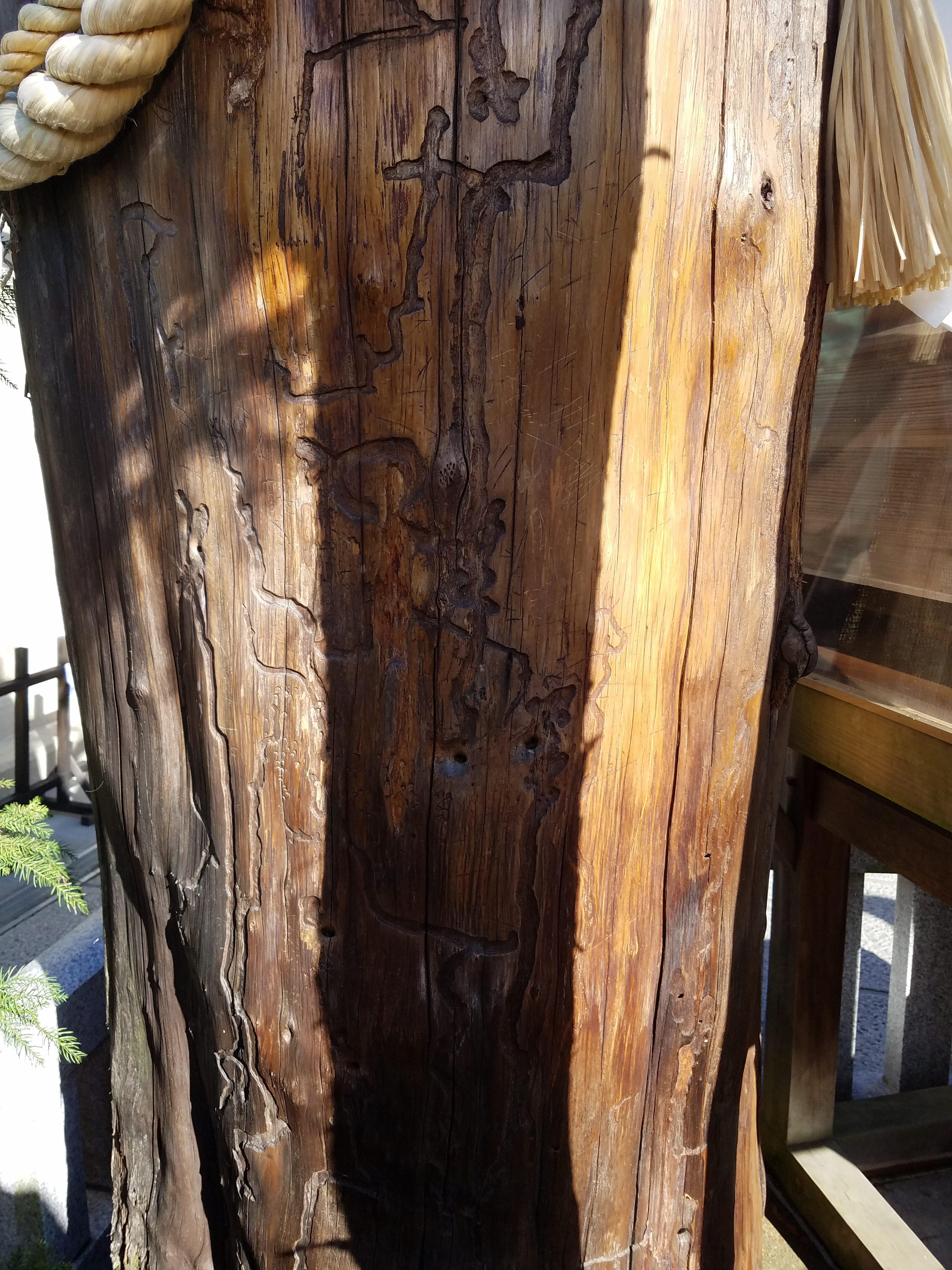
See the holes in that tree? Any guesses what they were made from?
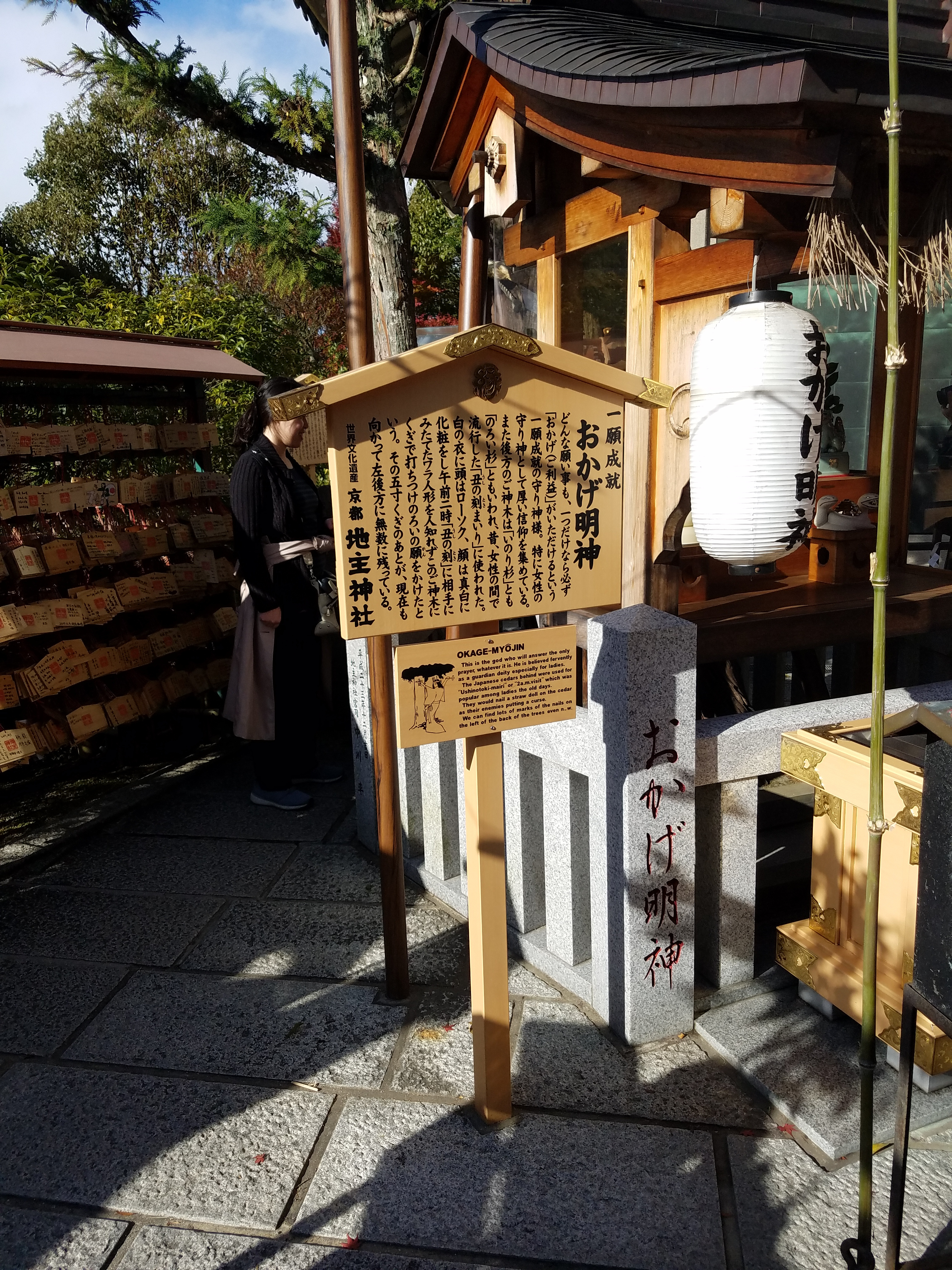
As it says in English (kind of) & Japanese here, the god of this mini shrine will answer one prayer, no matter what it is. Consequently, many people have used this prayer to curse people. The holes on that tree are the scars left behind by nails and dolls, from people performing the Ushi no Koku Mairi! Neat, or maybe scary!
Anyway, that said, today I’m posting a new yokai painting: Shukaku!
守鶴
しゅかく
APPEARANCE: Shukaku was a tanuki who lived in disguise as a human priest. He worked at Morinji, a Buddhist temple in Gunma Prefecture for many decades. Shukaku is best known for his miraculous tea kettle, known as the bunbuku chagama, which he left to the Morinji as a gift.
ORIGIN: Shukaku’s story has been told by Morinji for centuries, but different versions and variations have sprung up over the years. Its popularity spread during the Edo period thanks to a booming publishing industry, and it became well known across Japan. Although Shukaku is associated with Morinji, the structure of his story—a magical animal presenting a wonderful gift to humankind—is a recurring motif throughout Japanese folklore.
LEGENDS: Morinji was founded in 1426 by a priest named Dairin Shōtsū. While he was traveling through various countries on pilgrimage, he befriended a priest named Shukaku, and they traveled together. After Morinji was built, Shukaku stayed on to act as a head priest there for many years.
In 1570, an important religious gathering was held at Morinji. Priests from all over the country traveled to Morinji. When it came time to serve tea, the priests realized that they did not have enough kettles to serve such a large gathering. Shukaku—still serving the temple 144 years after his arrival—brought his favorite tea kettle to help serve the priests.
This tea kettle was a miraculous object, for no matter how many times you dunked a ladle in it, it was always brimming with enough hot water to make tea. It also stayed hot for many days after heating it! The kettle was given the name “bunbuku chagama”—chagama being the word for tea kettle, and bunbuku meaning “to spread luck.” The name was a pun as well: the sound of boiling water is bukubuku, which sounds very much like bunbuku. Thanks to Shukaku’s marvelous tea kettle, the gathering was a great success. The bunbuku chagama continued to be used by the temple for many years. Shukaku, as well, continued to work at Morinji for many years after that.
According to Morinji’s records, On February 28, 1587, a monk walked in on Shukaku while he was taking a nap. The monk noticed that Shukaku had a tanuki’s tail! Thus, Shukaku’s great secret was uncovered: he was not a human priest, but a tanuki in disguise. He had been living among humans for thousands of years. Long ago he had traveled through India and China. Eventually he met Dairin Shōtsū, who befriended him and brought him to Morinji, where he used his magic to serve the temple as best as he could. After his secret was uncovered, Shukaku decided it was time to leave Morinji. To apologize for the great shock he had caused Morinji, he gave them a parting gift: he used his magic to present the story of the Battle of Yashima, one of the final clashes of the Genpei War. To show their gratitude for all that he had done, the priests built a shrine to Shukaku, where he is still worshipped as a local deity. And the bunbuku chagama, which Shukaku left behind, is on display in his shrine at Morinji.
Greetings yokai fans!
In case you were afraid (see what I did there?) I wasn’t going to post today, here is the painting for the fear spirit, ushirogami!
You probably remember him from A-Yokai-A-Day, but here is his official writeup!
後神
うしろがみ
TRANSLATION: behind spirit
HABITAT: haunts cowardly people
DIET: fear
APPEARANCE: Ushirogami looks like a ghost with long black hair, and a large single eyeball located on the top of its head. It doesn’t have feet, but instead has a long, twisting body which allows it to leap high into the air.
INTERACTIONS: An ushirogami’s favorite tactic is to scare people by leaping out and appearing right behind them (thus its name). They like to tug on the hairs on the back of a person’s neck and then vanish just as they turn around to see touched them. Other pranks that ushirogami enjoy include placing their icy cold hands or breathing their hot breath onto the necks of their victims. Ushirogami particularly like going after cowardly young women walking the streets at night. They sneak up behind them and untie their hair, causing it to fall all over the place; or they run their hands through the woman’s hair and mess it around, causing it to become tangled. Sometimes they call up strong gusts of wind to blow umbrellas away.
ORIGIN: Ushirogami is thought to be a kind of okubyо̄gami—a spirit that causes cowardice, or that specifically targets cowardly people. Its name comes from the words ushiro (behind) and kami (spirit). However, there is a hidden pun in its name: ushirogami also means the hair on the back of your neck, and the phrase ushirogami wo hikikaeru (to have the hairs on the back of your neck pulled) means to do something with painful reluctance. It describes a person who has to do something that they really don’t want to do. As they search for some way out of it, they turn around and look behind them as if the hairs in the back of their head were being metaphorically pulled. The pun is that the ushirogami (spirit) is pulling on your ushirogami (hair), causing you to become cowardly and not want to do something. You turn around to see who pulled your hair, but there is no one back there. Thus the ushirogami can be explained as both an external entity which causes fear, or as the internal personification of your own cowardice or reluctance.
Greetings yokai fans!
Remember this guy from last month? He was the first A-Yokai-A-Day for October this year. Well I’ve finished the painting and here it is!
You probably already know the story since it was shared on the blog last month, but now it’s got a proper write-up for yokai.com. Here it is!
蓑火
みのび
TRANSLATION: raincoat fire
ALTERNATE NAMES: minomushibi, minoboshi, etc.; varies widely from place to place
HABITAT: wet rural areas
APPEARANCE: Minobi is a phenomenon that appears on rainy days in rural areas, particularly during the rainy season. Often it appears near bodies of water such as rivers or lakes, such as Lake Biwa in Shiga Prefecture. Minobi appears as a number of tiny fireballs which glow like fireflies. They float about in the air and tend gather in large numbers.
INTERACTIONS: Minobi gets its name from its tendency to gather around people wearing mino (traditional straw raincoats). It sticks to the raincoat and burns. When someone attempts to brush off or swat out the fire, the minobi instead multiplies, growing larger and larger. Eventually the person is forced to strip off the raincoat and leave it on the road.
ORIGIN: Minobi is found all over Japan, although often by different names and with different explanations. Sometimes this phenomenon is thought to be caused by natural gas escaping from the ground (as with other mysterious fireballs like onibi and kitsunebi). Most often it is said to be the work of a mischievous kitsune, itachi, or tanuki. Because it appears more frequently during the rainy season, sometimes minobi’s true form is believed to be a firefly or other insect, such as the minomushi (bagworm moth).
Greetings yokai fans! It’s been a little while since the last full painting was posted, but I’m happy to bring you another one today. Kokuri baba, the old temple hag! Read on to see what this scary old witch is all about.
Kokuri babā
古庫裏婆
こくりばばあ
“old temple hag”
Toriyama Sekien’s kokuri baba
“Baba” or “babā” is a suffix you’ll find on lots of yokai. It just means old woman. Kokuri is made up of “ko” meaning old and “kuri” which is the priest’s quarters in a temple. So this is an old hag who haunts the living quarters of an old temple. Kokuri babā is a fine example of a creepy old hag. In fact, in Toriyama Sekien’s description of her, he says that she is even more scary than Datsueba, the old woman who flails off your skin when you reach the underworld!
The reason she haunts is actually a tragic tale of love turned sour: she is the widow of the priest who used to work at a remote, rural temple. Once, she was a wonderful wife, helping out her beloved husband to run his temple, tending to the needs of the parishioners, cooking, cleaning, washing, and taking care of the temple grounds. However, after her husband died, she retreated into the temple’s living quarters and became a shut in. To survive, she steals the offerings of food and coins left behind by people visiting the temple. Over time, she gradually changes into a yokai. She starts to acquire meat from the corpses of the recently dead. When there are no fresh corpses available, she digs up the buried and peels off chunks of their rotting skin off to gnaw on.
It’s a tragic tale not only because she was widowed and forced to live by herself in the temple, but also because none of the temple parishioners ever lifted a finger to help her. You have to wonder how long it took for her to get this bad. If they had paid her a little more attention might she have remained human?
Although, now it does seems like she could make a nice pair with this guy. They at least have a common food interest…
 Unlock with Patreon