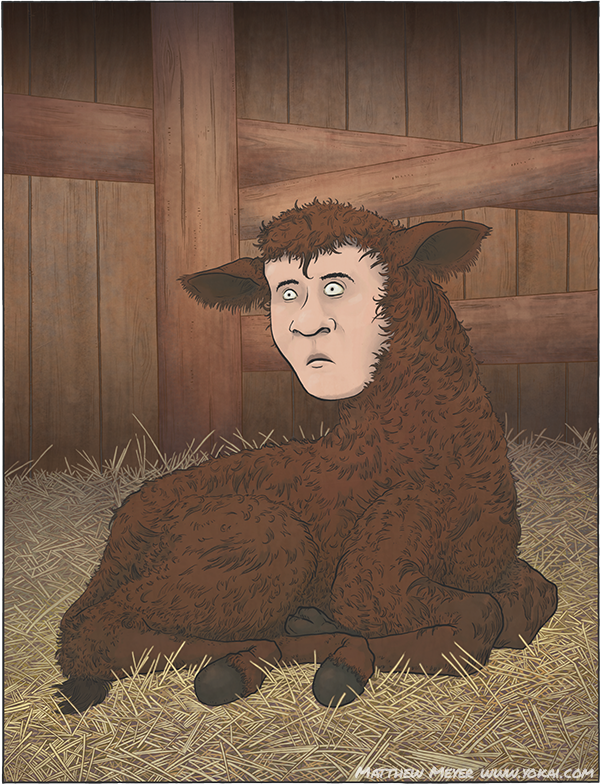
Atuikakura

Greetings yokai fans!

My printer was finally fixed, so your prints all went out this morning. Sorry for the delay, but I am relieved to have that fixed. There’s nothing scarier than having an expensive piece of machinery break down. In any case…

Today I present to you Atuikakura, the dreaded sea cucumber of Uchiura Bay! (Probably the only time in your life you’ll ever hear that phrase!)

アトゥイカクラ

あトぅいかくら

TRANSLATION: the Japanese reading of its Ainu name, atuy kakura

ALTERNATE NAMES: atsuuikakura

HABITAT: Uchiura bay in Hokkaido

DIET: mainly a scavenger; occasionally eats ships

APPEARANCE: Atuikakura is an enormous sea cucumber which lives deep in Uchiura Bay in Hokkaido.

BEHAVIOR: Atuikakura is rarely seen due its underwater lifestyle. It spends most of its time deep in the water, occasionally attaching itself to chunks of driftwood and floating to other parts of the bay.

INTERACTIONS: Despite rarely being seen, Atuikakura can be very dangerous to ships on the bay. When Atuikakura gets startled, it thrashes about wildly, smashing or capsizing ships which happen to be bear it. It also sometimes mistakes a wooden boat for a piece of driftwood, attaches its mouth to it, and drags the ship under the waves.

ORIGIN: Atuikakura is the Japanese transcription of its Ainu name, atuy kakura. Atuy is the Ainu word for the sea, and kakura means sea cucumber. According to local legend, Atuikakura was formed when a mouru—the traditional undergarment of Ainu women—washed down a river and into the bay. The mouru settled at the bottom of Uchiura Bay and and turned into a giant sea cucumber.

http://yokai.com/atuikakura/

Akkorokamui

Greetings yokai fans! Here is the most recent yokai, Akkorokamui! There are few yokai of this size. They are kind of like pre-modern kaiju. Quite rare! And very awesome, of course. I hope you enjoy it!

アッコロカムイ
あっころかむい

TRANSLATION: none; this is the Japanese version of its Ainu name, Atkor Kamuy
HABITAT: Uchiura Bay in Hokkaido
DIET: omnivorous; it can swallow ships and whales whole

APPEARANCE: Akkorokamui is a gigantic octopus god which resides in Hokkaido’s Uchiura Bay. When it extends its legs, its body stretches over one hectare in area. It is so big that it can swallow boats and even whales in a single gulp. Its entire body is red. It is so large that when it appears the sea and even the sky reflect its color, turning a deep red.

INTERACTIONS: Any ship foolish enough to sail too close to Akkorokamui will be swallowed whole. Therefore, for generations, locals have stayed away from the water when the sea and sky turn red. Fishermen and sailors who had no choice but to be on the waters would carry scythes with them for protection.

ORIGIN: Akkorokamui comes from Ainu folklore, where it is known as Atkorkamuy. Its name can be translated as “string-holding kamuy.” String-holding likely refers to the octopus’s string-like tentacles, while kamuy is an Ainu term for a divine being—similar to the Japanese term kami. In Ainu folklore, Akkorokamui is both revered and feared as a water deity, specifically as the lord of Uchiura Bay.

LEGENDS: Long ago, in the mountains near the village of Rebunge, there lived a gigantic spider named Yaushikep. Yaushikep was enormous. His great red body stretched over one hectare in area. One day, Yaushikep descended from the mountains and attacked the people of Rebunge. He shook the earth as he rampaged, destroying everything in his path. The villagers were terrified. They prayed to the gods to save them. The god of the sea, Repun Kamuy, heard their prayers and pulled Yaushikep into the bay. When the great spider was taken into the water, he transformed into a giant octopus, and took over charge of the bay as its god. Ever since then, he has been known as Atkor Kamuy, or Akkorokamui in Japanese.

http://yokai.com/akkorokamui/

Namekujira

Greeting yokai fans!

I have really fallen in love with this yokai over the research and painting it, just because it is so ridiculous. I think at some point I will have to revisit the Kujirazashi shinagawa baori and do some more of the yokai whales in that book.

It was a bit hard to figure out the second pun in this name; mainly because I am not a whale eater (I tried it once, it was disgusting). I had never heard of “kujira no hyakuhiro.” Neither had my wife, so she couldn’t figure out the joke either. But sometimes when you read something you just get the sense that there is something more to it… “namekujira no hyakuhiro” was just too specific and too weird to mention on its out without having some kind of secondary meaning.

Eventually after some searching around we found it. I can’t imagine many people eat whale intestines today, but in the Edo period I suspect it would have been a common enough dish that the readers of this book would have gotten the reference instantly and had a chuckle at the oh-so-stupid dad jokes within. Of course, now I can’t hear that phrase without rolling my eyes and laughing either.

Enjoy!

なめくじら

TRANSLATION: a portmanteau of slug and whale; slugwhale
HABITAT: homes and gardens; as a regular slug
DIET: leaves and plants

APPEARANCE: As its name implies, the namekujira is a very large slug.  Its body is described as reddish-brown in color, with a long stripe running down its back. From its head to its neck, it is covered in black spots.

BEHAVIOR: Namekujira live in gardens and behave just like ordinary slugs. It is their size that makes them so strange. They crawl across doors and fences, leaving behind enormous, silvery slime trails up to 100 hiro in length—almost 182 meters.

ORIGIN: Namekujira is described in the Kujirazashi shinagawa baori, a comical Edo-period book featuring different types of pun-based whale yōkai. Its name is a play on words, combining the words namekuji (slug) and kujira (whale). In addition to its name, this yōkai’s description contains one more pun. There is a dish made from whale intestines called kujira no hyakuhiro. The name literally means “whale’s 100 hiro,” which comes from the great length of the whale’s intestines. So the gag is that while kujira no hyakuhiro refers to a delicious meal, namekujira no hyakuhiro is just a 182 meter long slime trail.

Here’s Why You Should Support Me on Patreon

It’s been a long time since I last posted on this site. I haven’t been idle though. I am still painting yokai, and I have been since last summer. You may remember during A-Yokai-A-Day I mentioned my Patreon project. Well, I just wanted to share some of the awesome yokai that have been completed since then, thanks to the generous support of my Patreon backers.

A lot of people ask me if and when I will be making a third book. The answer is most definitely yes! Of course, as you can imagine, a book with over 100 illustrations take a very long time to do, not even to mention the research & translation. The illustrations that are being made via my Patreon project will all be compiled in a third volume of my yokai encyclopedia series. There will be a third Kickstarter eventually, but not until I am finished enough yokai to ensure that the Kickstarter backers don’t have to wait years until their book is finished.

You can read more about each of these yokai on yokai.com of course. If you love yokai as much as I do, consider supporting this project on Patreon, even for $1 per month. If you have a favorite yokai you’d like to see in the next book, this is your chance to be part of the creation process, long before the Kickstarter launches!

If you like what you see, visit patreon.com/osarusan and become a yokai patron!

Tomokazuki

Greetings yokai fans!

Finally I am happy to bring you the tomokazuki! This one took a bit longer that I had hoped, partially due to me being busy with the Cherry Blossom Festival, and partially because I struggled with the poses for a while. (It’s hard to get underwater poses!) But here it is, your deep-diving yokai, the tomokazuki!

トモカヅキ

ともかづき

TRANSLATION: together-diver; diving with
ALTERNATE NAMES: umiama
HABITAT: coastal areas where shellfish are found
DIET: unknown

APPEARANCE: Tomokazuki are aquatic yōkai who are found underwater and appear to ama, the deep-diving women who gather oysters, urchins, and other sea creatures. They appear on cloudy days. They are a kind of diving doppelganger; they take on the appearance of the ama who see them. The only way to tell them apart from actual women is the length of the headbands they wear; tomokazuki have much longer headbands.

INTERACTIONS: Tomokazuki appear to divers deep underwater. They beckon the divers closer to them, offering shellfish and sea urchins as a way to lure them deeper. They continue to lure the divers deeper and farther away from safety. Eventually the divers are either lured too deep or too far from the shore, and they drown.

In order to protect themselves from tomokazuki, superstitious ama will carry magic charms with them while diving; usually in the form of the seiman and dōman symbols on their headbands.

ORIGIN: One popular explanation among believers is that tomokazuki are the ghosts of drowned ama. Since they are only ever seen by ama deep under the water, belief in tomokazuki is not common. Most of the time, tales of tomokazuki encounters are written off as hallucinations or delirium brought on by the stresses of deep diving—high pressure, lack of oxygen, physical exhaustion, and the fear of being swept away.

In one story from Shizuoka, an ama and her husband took a boat out to sea to dive for shellfish. While deep underweater, the ama saw a tomokazuki and quickly surfaced to tell her husband. He mocked her for believing such stupid things, and ordered her to keep working. The ama dove back down as her husband commanded. She was never seen again.

In Fukui Prefecture there is yōkai called an umiama, which is very similar to a tomokazuki. When an ama dives down to the sea floor, the umiama surfaces. Then, when the ama surfaces, the umiama dives down to the sea floor. Because of this, it is very difficult to spot this yōkai. However, those unlucky few who do manage to see it become gravely ill shortly afterwards.

http://yokai.com/tomokazuki/

Kyokotsu

Greetings, yokai fans!

It’s April now, but here is March’s final yokai. I ended up getting bogged down in the line work, as I often do, because it had so many fun little details that I wanted to add. But the final turned out alright, I think.

More on April’s yokai coming soon…

http://yokai.com/kyoukotsu/

狂骨
きょうこつ

TRANSLATION: crazy bones
HABITAT: wells
DIET: none; it is powered solely by vengeance

APPEARANCE: Kyōkotsu is a ghostly, skeletal spirit which rises out of wells to scare people. It is wrapped in a ragged shroud, with only its bleached skull emerging from its tattered clothes.

BEHAVIOR: Kyōkotsu are formed from bones of skeletons which were improperly disposed of by being discarded down a well. The bones may come from a murder victim, or a suicide, or someone who died after accidentally falling into a well. The lack of a proper burial—and specifically the egregious disrespect shown by discarding bones in this manner—creates a powerful grudge against the living. This grudge transforms the deceased into a shiryō. Like other ghosts, they can pass this grudge on to those they come in contact with. A kyōkotsu lies at the bottom of its well until it is disturbed, at which point it rises up to curse those unfortunate enough to be using the well.

ORIGIN: Kyōkotsu was invented by Toriyama Sekien for his book Konjaku hyakki shūi. In his description, he writes that this yōkai’s name is the origin of the word kyōkotsu, which means fury and violence. While there is a word in a local dialect of Kanagawa which does match this description, there is no evidence actually linking it to this yōkai. It is more likely that Toriyama Sekien—who was fond of wordplay—actually created this yōkai based on words in local dialects and just made up a false etymology to make the story more interesting.

Donotsura

Greetings yokai fans! Today I introduce you to donotsura, a weird a wonderful yokai from the same picture scroll that brought us shiro ukari. It’s a short writeup, but it’s got an interesting origin nonetheless! I hope you enjoy it!

胴面
どうのつら

TRANSLATION: torso face
ALTERNATE NAMES: akahadaka
HABITAT: unknown
DIET: unknown

APPEARANCE: Dōnotsura’s body appears much like that of a human’s, except that it is missing everything from the neck up. Its extremely large facial features are prominently displayed on its torso, just as its name implies.

ORIGIN: Dōnotsura appears on yōkai picture scrolls, but only his name and illustration appear. Like many picture scroll yōkai, no stories exist explaining what it does or where it comes from. However, its most likely origin is as a play on words. There is an expression in Japanese—”dono tsura sagete“—which is used to scold a person who looks inappropriately calm when they should be ashamed of something they’ve done. The connotation of this idiom is to lower a mask over one’s face, as in, “How dare you come here wearing that face!”; however, taken literally it means to “lower a face,” just as this yōkai’s face has been lowered down to his torso.

http://yokai.com/dounotsura/