Tenjoname

Greeting yokai fans!

Today I present tenjoname, the ceiling licker. I’m pretty sure my house has had a tenjoname in it at some point, because our ceilings are covered in spots. At first we thought they were water stains from a leaky roof, but now… now I’m pretty convinced it was a tenjoname after all. (I’m pretty sure we have a sakabashira as well, so this house is clearly yokai-friendly.)

http://yokai.com/tenjouname/

天井嘗
てんじょうなめ

TRANSLATION: ceiling licker

HABITAT: cold, dark homes with tall ceilings

DIET: dirt, dust, and ceiling grime

APPEARANCE: Tenjōname is a tall yōkai with a very long tongue. It appears in houses with tall ceilings, particularly in the cold months when light cannot reach all the way to ceiling and casts weird shadows into the rafters. It’s body is covered with strips of paper which resemble a matoi—the paper flags carried by Edo period firemen.

BEHAVIOR: Tenjōname is named for its primary activity: licking ceilings. The older a house gets, the more dust and grime collects in hard-to-clean places such as the ceiling. This attracts tenjōname, who lick the dirty ceilings to feed on the filth. The telltale sign that a tenjōname has been licking a ceiling is the appearance of dark stains and splotches on ceilings, walls, and support pillars.

ORIGIN: Tenjōname first appears in Toriyama Sekien’s Hyakki tsurezure bukuro, although its appearance seems to be inspired by older yōkai scrolls. Like many of the entries in that book, it appears to be a pun based on one of the essays in Yoshida Kenkō’s Tsurezure gusa. Essay number fifty five gives advice on building a house, and states that too high a ceiling would make winters feel too cold and lamplight seem to dark. Toriyama Sekien references this essay in his description of tenjōname. Although it is not specifically stated, based on its appearance and the fact that most of the yōkai in Hyakki tsurezure bukuro are tsukumogami, it is likely that tenjōname is a transformed matoi.

LEGENDS: Since tenjōname was created in the 18th century, older folktales about it do not exist. However, since then a number of stories have been invented. One such story claims that a samurai from Tatebayashi Castle (the ruins of which are in present-day Gunma Prefecture) captured a tenjōname and used it to clean all the spiderwebs and grime from the ceilings of the castle. More recent legends claim that the stains left by tenjōname take the form of hideous human faces. Staring too long at these stains—particularly when they appear above your bed—can lead to madness and even death.

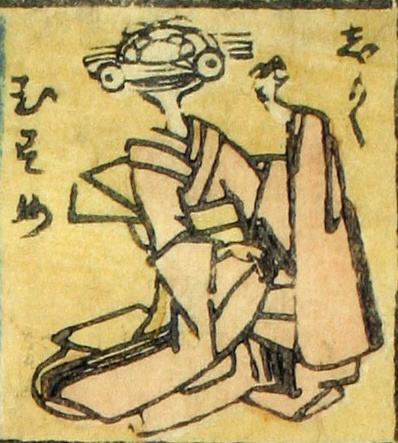
Shumoku musume

Greetings yokai fans!

Today I present to you shumoku musume, or “hammer girl.”

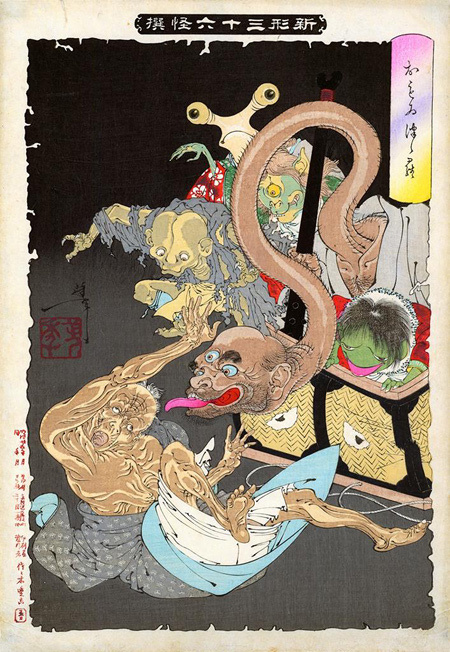
I fell in love with this yokai the first time I saw her, in one of Tsukioka Yoshitoshi’s prints. Although there’s no description of her in that print, I really wanted to find out more of that strange, snail-like yokai in the background:

She’s actually quite a minor yokai, and is not the subject of any stories or legends. She appears in obake karuta, however, and that is her main claim to fame. While she doesn’t do much except for maybe jump out and spook people, it’s her unique appearance that makes her so appealing, and I’m sure that’s why she was included in the obake karuta.

What’s not to love about that?

Anyway, here she is:

http://yokai.com/shumokumusume/

撞木娘
しゅもくむすめ

TRANSLATION: hammer girl
HABITAT: mountain passes
DIET: unknown

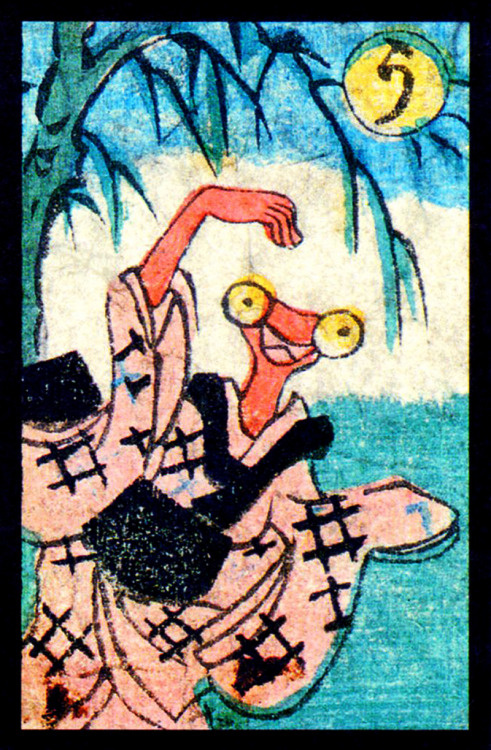
APPEARANCE: Shumoku musume has a head which resembles that of a hammerhead shark or a snail. She has large eyes which extend out from the sides of her head. She wears a furisode kimono, usually worn by young, unmarried women.

ORIGIN: Shumoku musume is not a major yōkai, yet her image is fairly well known. This is because she was included in obake karuta, a yōkai-themed version of the popular card matching game karuta. Although no story accompanies her in obake karuta, her card says that she appears on the Usui Pass, which separates Gunma and Nagano Prefectures.

The word shumoku refers to the wooden hammers used to strike temple bells. It is not clear if shumoku musume is a tsukumogami of a bell hammer, or if her name merely refers to the fact that her head resembles a wooden hammer’s head.

Appossha

Greetings yokai fans!

It’s been a while since the last post, but I am excited to share with you the appossha! Although this is a winter yokai, I thought it might help to keep you cool in this unquenchable summer heat!

I think that appossha is a really interesting yokai for a number of reasons. First of all, he is a super local yokai, found only in one tiny hamlet here in Fukui prefecture. He’s so local that people in Fukui who aren’t from that village hardly even know of him.
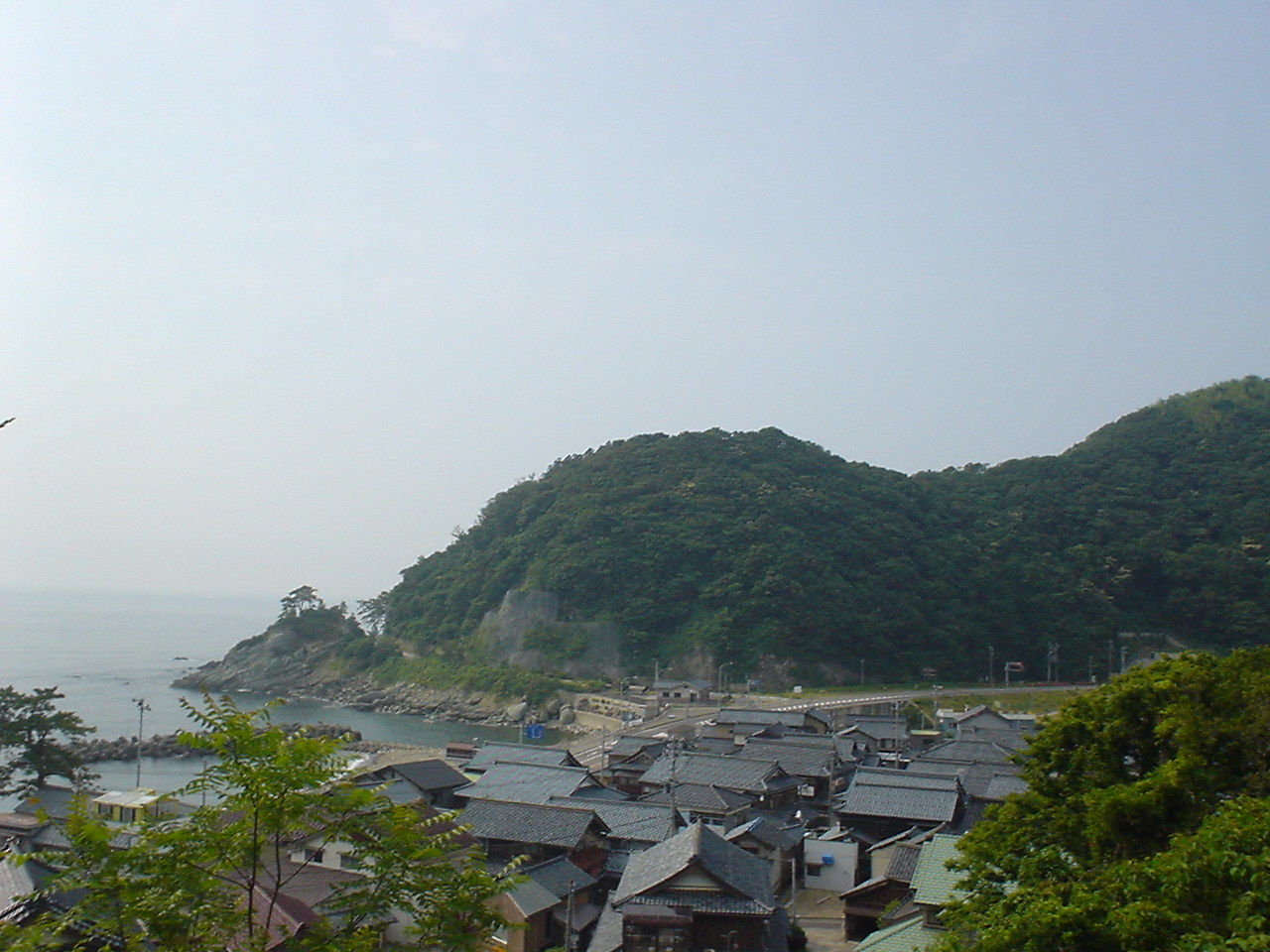
Koshino, Fukui, pop. ~1700 -> probably the same as the number of people who have heard of appossha.

So I love this yokai because he’s so local and so unknown, and also because he’s from Fukui, where I live. But more than that, I love what this yokai represents.

You’ll read about his origins down below, so I won’t repeat them here, but I just love the story of how this yokai came about. It’s one of those things where you can visualize almost exactly what happened in your mind’s eye: some foreign-speaking fisherman with only a smattering of Japanese, crawling out of the icy waters, red-faced, covered in sea weed, and banging from door to door begging in his broken language for some food. Of course children would be scared! And yet, when offered food and warmth, he turns out to be not monstrous at all.

What’s more, this yokai is a remnant of a lost aspect of folk religion, which has been blended and absorbed into modern traditions, but can be seen pretty clearly in this example.

The marebito religion is a concept that was put forward by folklorist Orikuchi Shinobu, a student of Yanagita Kunio. It describes a set of folk beliefs centered around what could be described as worship of “the stranger.” It describes an archetypal folk belief found in which a spirit from the world of the dead visits a village, and is offered food, shelter, etc. Yokai like the appossha and the namahage are perfect examples of this, but we also see some elements of this ancient folk religion in the festival of Obon, where the dead are welcomed back to the world of the living for one day. Although this isn’t a “religion” in the sense of having a doctrine or scriptures, it does describe a common set of practices seen throughout Japan, which still echo in contemporary Japanese culture.

Even pop culture can echo this, as we see in the scene where No Face enters the bath house in Spirited Away. No Face himself is a great example of a marebito; he is an unknown creature from an unknown land (unknowable, even, as he wears a mask — just as yokai like appossha wear masks). He brings gifts to the other guests at the bathhouse, but he also brings danger and threatens them. He’s welcomed in a ritualistic way with a song and a ceremonial parade. It’s clear that the storytellers did their research!

This sort of folk belief is of course not restricted to Japan. We see parallels in folk religions all over the world. Masks have been used as important religious devices all across the ancient world, and the concept of the stranger from another world is found all over folk lore, religion, and literature. They worship “the stranger” in the fantasy religion of Westeros. Heck, the movie E.T. is almost a perfect parallel to this type of story.

That may be stretching it a bit, but it’s clear there is something deeply, profoundly human that can be found even in a little-known, somewhat goofy yokai like appossha.

http://yokai.com/appossha/

あっぽっしゃ

TRANSLATION: from a phrase meaning “give me mochi”

HABITAT: underwater, in the Sea of Japan

DIET: omnivorous

APPEARANCE: The appossha is a scary monster which appears in the village of Koshino in Fukui prefecture. It resembles a red oni, with a large head and dark, kelp-like hair. It wears the clothing typical of a workman.

INTERACTIONS: Appossha live in the Sea of Japan off of Fukui prefecture. They appear on land once a year, on Koshōgatsu—a holiday celebrating the first full moon of the lunar new year. On this night, the appossha crawl out of the sea and wander the village streets, banging iron tea kettles and chanting, “Appossha!” The travel from house to house, demanding food and threatening children. They ask each house if there are any ill-mannered children living there that they can take back to the sea with them. Once a household’s children have been thoroughly scared, the parents give a gift of mochi to the appossha and it leaves.

ORIGIN: The appossha tradition is said to come from long ago, when a sailor from a foreign land was shipwrecked and swam ashore in Fukui prefecture. He traveled from door to door begging for food. The name “appossha” is thought to be a heavily accented variation of the foreigner’s words, asking for some mochi to eat: “Appo (mochi) hoshiya (want).”

The appossha is part of a family of oni-like yōkai which are found all over Japan, but especially along the Sea of Japan coast. The namahage of Akita Prefecture are the most famous example. In nearby Ishikawa and Niigata Prefectures, similar yōkai named amamehagi can be found. In Yamagata they are known as amahage. Although the minor details (such as where the yōkai come from) differ, the key parts of each story are the same: these yōkai come from the wilderness around the new year, scare young children, and leave once offered a gift from the villagers.

Appossha are an example of a type of creature called a marebito. In Japanese folk religion, marebito are divine messengers—demons, gods, or otherwise—which come from the world of the dead to visit our world at set times. Some deliver prophecies or bring gifts, others bring disaster. The strange foreign spirit is welcomed as a guest, fed, sheltered, and treated kindly and respectfully. Sometimes they are revered as gods. Their coming is often welcomed in the form of festivals and rituals. Although the marebito folk religion is no longer practiced today, aspects of it are still a visible part of Japanese culture. Yōkai like the appossha and namahage, festivals like Obon, and the use of masks in noh theater have preserved many of the elements of this ancient superstition.

July Yokai Plans

Greetings yokai lovers!

It’s the rainy season here in Fukui, although in parts of Japan the season has ended and summer has begun — much earlier than in most years. That is causing some worries about drought and excessive temperatures damaging this year’s crops. Here in Fukui we are still suffering from extremely high humidity and temperatures in the mid to upper 30s, so I am happy to be working indoors! (The endangered storks in the photo above don’t seem to mind the heat. They like to hang out in rice paddies and lotus ponds.)

With the onset of summer, Japan is also officially entering ghost season! Unlike in the West, where October is spooky month due to the association of ghosts and monsters with Halloween, in Japan ghosts are associated with the summer. There’s a common saying that ghost stories will keep you chilled on hot summer nights, which is something I can definitely go along with!

For anyone visiting Japan this month, Kyoto’s Mononoke Ichi yokai festival is holding an event during the famous Gion Matsuri. I will not be attenting this one because I am busy preparing for a big yokai festival here in Fukui next month. But if you’re in Kyoto for the Gion Matsuri you’ll probably want to stop by the Mononoke Ichi event as well.

This month I’ve got some fun yokai to share with you all, including a local Fukui story featuring Tanabe Godayū, whom we’ve read about before. More on that soon!

Kanazuchibo & Okka

Greetings yokai fans!

Today I bring you this month’s final yokai (or pair of yokai, rather).

Up top we have kanazuchibo and down below we have okka.

These yokai are similar to the previous ones in that their names were stapled on after the fact, and nothing has ever been written to describe their appearance. They’re also not folkloric yokai, as they only exist in the world of paintings. That said, they appear in a lot of paintings! These guys pop up in almost every yokai picture scroll, and so for a pair of yokai with absolutely nothing to their names (and not even a name, technically!), they are pretty well known.

I have had many requests to paint these guys, going back years. A lot of people want to know more about them, so I never wanted to be the bearer of bad news and say that there really just isn’t much to know about them. However, it’s possible to go to some length about them even though they don’t have any stories or names.

Read on to find out more:

Kanazuchibo http://yokai.com/kanazuchibou/
金槌坊
かなづちぼう

TRANSLATION: hammer priest

ALTERNATE NAMES: daichiuchi (earth striker), ōari (giant ant), yarikechō

APPEARANCE: Kanazuchibō is an odd-looking yōkai which appears in some of the earliest picture scrolls. It is depicted in a number of different ways by different artists, but in most depictions it has long, flowing hair, big, buggy eyes, and a beak-like mouth. Some paintings portray it more bird-like, while others portray it in as a grotesque, misshapen goblin-like creature. It’s most identifying feature is the large mallet it carries. It is usually portrayed holding the mallet over its head, ready to strike another yōkai.

ORIGIN: A mallet-weilding yōkai appears in many of the earliest picture scrolls of the night parade of one hundred demons. In its oldest depictions, kanazuchibō appears with no name or description. Names like kanazuchibō and daichiuchi were added much later, during the Edo period. However no description of its behavior were ever recorded. Many artists and yōkai scholars have made guesses at its true nature.

It has been suggested that kanazuchibō may be a spirit of cowardice.  His posture and his hammer evoke the proverbs “to strike a stone bridge before crossing” (meaning to be excessively careful before doing anything) and “like a hammer in the water” (meaning to always be looking at the ground and watching your step; picture a hammer in a river, with its heavy head sinking below the surface, but its wooden handle floating upright). Perhaps this is a yōkai which haunts cowards, or which turns people into cowards when it haunts them.

Kanazuchibō is also known as ōari, or giant ant. In prehistoric Japan there was a culture which built large earthen burial mounds known as kofun. It has been suggested that in the Kofun people’s religion, ants were revered as divine creatures since they build earthen mounds. As the Kofun religion died out, those creatures formerly worshiped as kami grew resentful and warped into these ant-like yōkai. While it’s an amusing story, there’s no evidence to suggest the Kofun people actually worshipped ants. This explanation was almost certainly made up by modern storytellers.

Toriyama Sekien included a version of this yōkai in his book Hyakki tsurezure bukuro. He re-imagined it as a tsukumogami born from a keyari—a hairy spear used as decoration and in parades. He named it yarikechō, or “spear hair chief.”

Okka http://yokai.com/okka/
大化
おっか

TRANSLATION: a baby-talk corruption of obake (“monster”)
ALTERNATE NAMES: akaheru, chikarakoko, gamanoke (“frog spirit”); countless others

APPEARANCE: Okka is a small, bulbous yōkai. It is usually depicted as a round, bright red creature with big eyes, two clawed feet, and a diminutive tail. There are many variations of this yokai, with minor difference in color, number of appendages, facial features, and hair.

ORIGIN: Okka appears in many of the oldest yōkai picture scrolls. Since its original name was never recorded, countless names have been used to describe this yōkai. The word okka is a baby talk variation of obake, a generic word for a ghost or monster. It fits this yōkai quite well, as okka itself has a somewhat generic and baby-like appearance. It also fits an established pattern of monsters being named in baby talk; waira, otoroshi, gagoze, and uwan are also thought to be “baby-fied” variations of scary words.

It has been suggested that okka may be a frog spirit, based on its appearance. It has also been suggested that okka is a tsukumogami, as it appears alongside other tsukumogami in paintings. Though it was never given a name or an explanation, okka has yet remained a common sight in scrolls depicting the night parade of one hundred demons. Okka is frequently depicted together with kanazuchibō; it appears to be the target of kanazuchibō’s hammer. However, their frequent pairing may be no more than a coincidence. Painters frequently copied directly from earlier yōkai scrolls, and without any description there is no way of knowing if the original painting that depicts okka being targeted by kanazuchibō was done so for a specific reason, or just because it looked amusing.

Furuougi & Hasamidachi

Greetings yokai fans!

It’s been a bit quiet since the last posting… This illustration and these yokai were quite an ordeal! I’m happy with the results of the final image, but boy did I wrestle with these two and the accursed background for a long time!

Worse than the painting, though, was researching. As I mentioned before, there is literally no information on them at all, anywhere. They were invented as images only, and have appeared on the earliest known yokai scrolls as well as many copies in the following centuries.

I took that more as a challenge than a fact, and I searched and searched and searched and searched. I was really hoping to find something interesting, some obscure tale, or anything in older folklore… but ultimately I was only able to confirm that there is no reliable description or folklore related to these two characters. There are some apocryphal stories in English-language books, but they appear to have just been made up by the authors.

I did manage to get their names, which were also invented more recently, of course, but I have a more reliable source for those. They were “named” by a present day yokai researcher who is a member of one of the largest yokai societies in Japan. He put out a book in the early 2000’s and added names to a bunch of these bizarre yokai from the early scrolls, and I figure his naming scheme is good enough for me. You probably won’t find them named Hasamidachi and Furuogi anywhere else, other than in reference to the same book by Aramata Hiroshi, but they are better names than just “fan monster” and “scissors monster.”

Anyway, here they are:

furuougi & hasamidachi

Hasamidachi

Furuōgi

Fugurima yohi

Greetings yokai fans!

Today’s yokai is another companion piece.

This is fuguruma yohi, the strange queen of the book cart.

You can probably guess who her companion is, as they are king and queen. Last month’s chirizuka kaio and today’s fuguruma yohi appear opposite each other in their original publication, Hyakki tsurezure bukuro. Like the strange king, this strange queen was made up by Toriyama Sekien, based on a pun from the Tsurezure gusa.

It’s never specified just what she is queen of (if anything). Presumably, she is just the queen of that book cart and it’s just a fancy name. But maybe she is queen of the tsukumogami entirely, ruling alongside the chirizuka kaio? It’s fun to speculate, but really there’s no answer, as neither of them are folkloric or mythological figures. They were both invented for Sekien’s book and really just mainly as silly puns that sharp-eyed and educated readers would enjoy on a level above just the funny illustration. Toriyama Sekien was a master at creating multi-leveled humor.

But regardless of what she is queen of, she’s a fun character to look at and a good addition to our collection of yokai!

Fuguruma yōhi

fugurimayohiThis post originally appeared on Patreon.com. Support my work and feed your yokai addiction by becoming a backer for only $1 per month!